Heating problems don't always come with clear labels. Here's how to tell what's a genuine emergency — and what to do about it on Long Island.
Share:
Summary:
Most heating problems don’t announce themselves at a convenient time. They show up on a Tuesday night in February, when it’s 18 degrees outside and your house is already starting to feel it. The question that comes up fast is: does this need emergency service right now, or can it wait until morning?
That’s not always an easy call. Some problems are genuinely dangerous. Others are urgent but not life-threatening. And some can wait — though not as long as you might think. This page walks you through how to tell the difference, what signs should put you on the phone immediately, and how staying ahead of your heating oil needs can keep you out of this situation altogether.
Not every heating issue is an emergency, but some absolutely are — and confusing the two can be costly. The clearest emergencies involve safety: if you smell something burning, if your carbon monoxide detector goes off, or if anyone in the house is experiencing headaches, dizziness, or nausea while the heat is running, stop using the system and get everyone outside. Those are signs of potential CO exposure or combustion failure, and they require immediate action — not a wait-and-see approach.
Beyond safety hazards, there’s a second category of emergency that’s less dramatic but just as real: a complete loss of heat during extreme cold. In Suffolk County, when temperatures drop into the teens or single digits, an unheated home can reach dangerous indoor temperatures within a few hours. For families with young children, elderly relatives, or anyone with a health condition, that window is even shorter.
There’s a real cost to calling for after-hours service — emergency rates typically add $50 to $100 on top of standard repair costs, with most repairs running between $150 and $500. So it’s a fair question: when does it actually make sense to make that call at 2 AM instead of waiting until morning?
The short answer is this: if your heat is completely out and it’s below freezing outside, don’t wait. Pipes in Suffolk County’s older housing stock — especially in homes built during the post-WWII boom across communities like Babylon, Islip, and Brookhaven — are often routed through crawl spaces and exterior walls with minimal insulation. Once indoor temperatures drop low enough, those pipes can freeze and burst. The resulting water damage can run into the tens of thousands of dollars, which makes the emergency service surcharge look minor by comparison.
You should also call immediately if you notice your furnace is running but producing a yellow or orange flame instead of a clean blue one. That color shift can indicate incomplete combustion and a potential carbon monoxide leak — one of the more serious risks associated with oil heating systems. It’s not common, but it’s also not something to sleep on.
On the other hand, if your system is running but seems less efficient than usual, or if it’s making a new noise that isn’t accompanied by any safety warning signs, that’s worth a call during business hours rather than an emergency dispatch. Same goes for a system that’s cycling on and off more frequently than normal — worth addressing soon, but not necessarily at midnight.
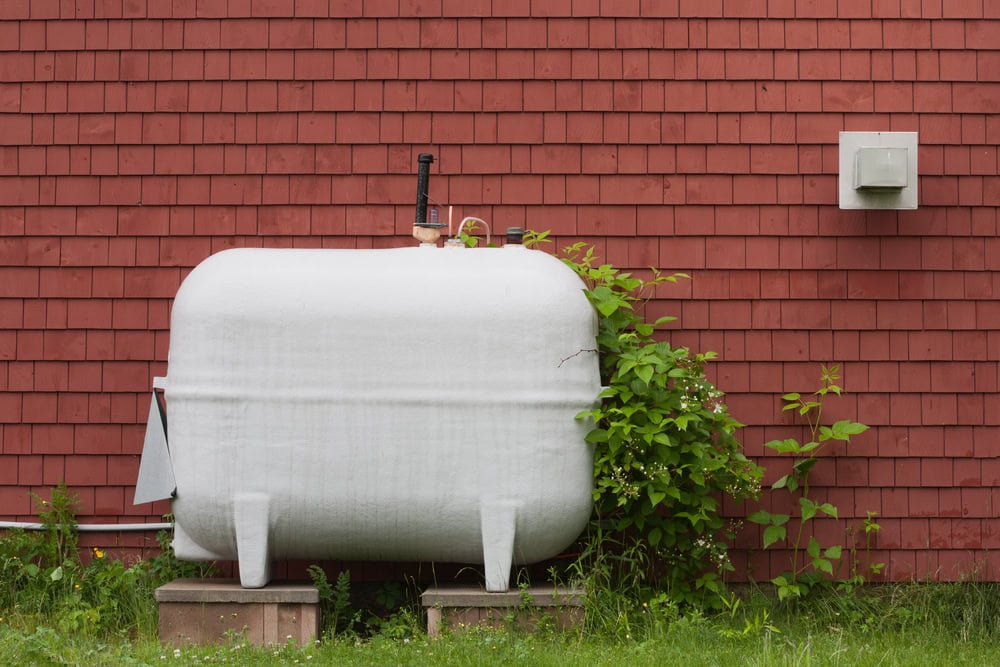
One scenario that catches a lot of Suffolk County homeowners off guard: running out of heating oil. It feels like it should have a simple fix — just order more — but when a system runs completely dry, it often needs to be bled and restarted by a technician before it’ll fire up again. That process takes time, and in the middle of a cold night, time matters. If you’re running low, don’t wait until the tank hits zero.
There’s a connection between energy efficiency and emergency breakdowns that doesn’t get talked about enough. Older oil furnaces — particularly systems from the 1970s and 1980s that are still running in homes across Smithtown, Medford, and Holtsville — often operate at 60 to 70 percent AFUE, meaning they’re wasting up to 40 percent of the fuel they burn. That inefficiency isn’t just expensive. It’s a symptom of wear, and worn systems fail more often.
Modern high-efficiency oil furnaces run at 85 to 95 percent AFUE. The jump in performance is significant, but even if you’re not ready to replace your system, there’s a meaningful middle ground: an annual tune-up. A properly serviced oil burner can recover 5 to 10 percent of lost efficiency, and more importantly, a technician can catch the small problems — a worn nozzle, a cracked heat exchanger, a clogged filter — before they become the kind of failure that leaves you without heat on a January night.
This matters more in Suffolk County than in many other markets because of the age of the local housing stock. A large share of homes here were built between 1945 and 1965, and some are still running their original or early-replacement heating systems. A furnace that’s pushing 20 or 25 years old isn’t necessarily on its last legs, but it is statistically more likely to fail during peak demand — which is exactly when you least want it to.
Energy efficient heating isn’t just about lower bills. It’s about a system that’s reliable when the temperature outside is unforgiving. Keeping up with maintenance is the most cost-effective way to reduce your emergency risk. We offer a tune-up special at $149.95 — regularly $249.95 — specifically because we’d rather help you avoid an emergency than respond to one.
Want live answers?
Connect with a Suffolk Oil expert for fast, friendly support.
Preventive maintenance isn’t glamorous, but it’s the single most reliable way to keep emergency heating services out of your winter. The core of a good maintenance schedule for an oil-heated home is simple: get your burner serviced once a year, ideally in late summer or early fall before the heating season begins.
August through October is the window. By the time November arrives and temperatures start dropping across Suffolk County, service companies are fielding calls from homeowners who waited too long. Scheduling early means shorter wait times, a system that’s ready before you need it, and no scrambling when the first cold snap hits.

A standard oil burner tune-up covers the components most likely to cause a breakdown if they’re neglected. That typically includes cleaning the heat exchanger and combustion chamber, replacing the fuel nozzle and oil filter, checking and adjusting the burner’s air-to-fuel ratio, testing the ignition system, and inspecting the flue for blockages or signs of damage.
The goal isn’t just efficiency — it’s reliability. A technician going through that checklist is also looking for anything that’s worn, cracked, or out of spec. Finding a failing nozzle in October costs you a parts and labor charge. Finding out your nozzle failed at 11 PM in February costs you that plus an emergency service surcharge, plus the stress of managing a cold house while you wait.
There’s also the carbon monoxide piece. A properly tuned oil burner burns cleanly and completely. A dirty or maladjusted system produces more CO as a byproduct of incomplete combustion. Annual servicing is about making sure the heat is safe. For homes across Suffolk County where oil heat is the only practical option, particularly in areas of Brookhaven Town like Mastic, Shirley, and Holtsville where natural gas infrastructure is limited, that reliability matters year after year.
One thing worth knowing: if your system is more than 15 years old, a tune-up is even more valuable because the technician can give you an honest read on how much life is left. That information helps you plan rather than react — which is almost always the better position to be in.
Running out of heating oil is one of the most common — and most preventable — heating emergencies in Suffolk County. It happens more than you’d think, and it tends to happen at the worst possible times: during a nor’easter when delivery trucks are stretched thin, on a holiday weekend when the phone lines are busy, or in the middle of a cold snap when everyone needs oil at once.
The simplest way to avoid it is to order before you hit the bottom quarter of your tank. Oil systems don’t always give you a clean warning before they cut out, and a system that runs completely dry often needs more than just a delivery to get back up and running. Keeping a buffer in the tank isn’t just good practice — it’s insurance against a problem that compounds quickly in cold weather.
For Suffolk County homeowners who prefer COD delivery without a service contract, the key is staying aware of your usage. A typical home here burns more oil during a cold stretch than during a mild week, and January and February are historically the months when demand spikes and delivery lead times stretch. Placing your order before you’re running low — rather than when you’re already out — gives you flexibility that disappears the moment you’re in crisis mode.
We offer 24/7 online ordering with no login required, which means you can place an order at any hour without creating an account or waiting for business hours. Same-day and next-day delivery is available, and our phone line at 631-924-4030 is answered around the clock — including weekends, holidays, and during storms. That’s a local team that’s been serving Nassau and Suffolk Counties for over 50 years and knows what Long Island winters actually look like.
If you’re ever unsure whether your situation qualifies as an emergency — whether it’s a fuel issue, a system issue, or something in between — calling us is always the right first step. We’ll help you figure out what you’re dealing with and what needs to happen next.
When something feels off with your heat, trust that instinct. Safety concerns — unusual smells, a yellow flame, CO alarm, anyone feeling unwell — always warrant an immediate call, no matter the hour. A complete loss of heat in freezing temperatures is also an emergency, full stop. Everything else falls on a spectrum, and the right move is usually to get a professional opinion sooner rather than later.
The bigger picture is this: most heating emergencies are avoidable. An annual tune-up, a watchful eye on your oil level, and a reliable provider you can actually reach at 2 AM on a Sunday go a long way toward keeping the heat on all winter. Suffolk County homes — especially the older ones — need that kind of consistent attention.
If you’re dealing with a heating issue right now, or you just want to get ahead of the season before the cold sets in, reach out to us. We’ve been doing this on Long Island for over 50 years, and we’re here whenever you need us.
Article details:
Share:
Continue learning: