When your heat goes out in the middle of a Long Island winter, every minute counts. Here's what real 24-hour emergency heating service actually looks like.
Share:
Summary:
It’s 2 AM. The thermostat reads 58°F and dropping. You check the tank gauge and it’s sitting on empty — or the boiler just stopped responding entirely. Your first instinct is to call someone, but then comes the doubt: Will anyone actually pick up? Will they show up tonight, or is “24-hour service” just a line on a website?
Those are fair questions. In Suffolk County, where January lows can dip into the low 20s and a nor’easter can roll in with almost no warning, a heating failure isn’t something you can table until morning. Here’s exactly what real 24-hour emergency heating service looks like — and what you should do the moment something goes wrong.
Not every heating issue needs a midnight call. But some absolutely do, and knowing the difference matters when temperatures outside are in the teens and your home is already losing heat.
A true heating emergency is anything that puts your safety, your family, or your home at immediate risk. That means no heat at all when outdoor temperatures are at or near freezing, a carbon monoxide alarm going off near your heating equipment, the smell of oil or fuel inside the house, or a water heater that’s leaking or making loud pressure-release sounds. These aren’t situations to monitor — they’re situations to act on immediately.
On the other hand, a furnace that’s cycling on and off more than usual on a 45°F night, a pilot light that keeps going out when it’s mild outside, or a slightly lower water temperature from your hot water heater — those are real issues worth addressing, but they can typically wait for a scheduled service call without putting anyone at risk. Keeping your heating oil supply and system needs in check can also help prevent avoidable heating problems.

Oil-fired water heaters fail differently than furnaces, and the warning signs are easy to miss until the situation gets serious. If your hot water cuts out completely, that’s inconvenient. But if you’re also seeing water pooling around the base of the tank, hearing a popping or rumbling sound from inside the unit, noticing discolored or rust-colored water coming from your taps, or watching the pressure relief valve release steam or water on its own — that’s a water heater emergency service situation, and it needs immediate attention.
The pressure relief valve is worth understanding. It exists to prevent the tank from over-pressurizing. When it starts releasing on its own, it’s telling you that something inside the system is already under dangerous stress. Don’t ignore it, and don’t try to manually reset it repeatedly without having a technician assess the underlying cause.
If you suspect your water heater is failing, the first thing to do is shut off the cold water supply line feeding into the tank — there’s typically a valve on the pipe directly above or beside the unit. If the tank runs on oil and you’re not sure whether the burner itself is the problem, turn the system switch to “off” rather than letting it continue to fire. This limits further damage while you wait for help.
In Suffolk County, a lot of the housing stock — particularly in communities like Bay Shore, Sayville, and Holbrook — was built in the postwar decades, and many of those original oil-fired water heaters have been running for 20 or 30 years. Older tanks are more prone to sudden failure, especially under the strain of a cold winter. If yours is more than 15 years old and you’ve never had it serviced, a tune-up or inspection before the season peaks is genuinely worth the call. We offer a tune-up special at $149.95 — regularly $249.95 — precisely because we’d rather help you avoid an emergency than respond to one.
One more thing worth knowing: when a water heater fails completely in a home that also loses heat, the compounding effect on indoor plumbing can be significant. Cold water sitting in pipes that are no longer being warmed by a functioning heating system is exactly the kind of scenario that leads to the next problem on this list.
The gap between calling for help and having heat restored is where most of the real risk lives. What you do during that window matters, especially if you’re in a part of Suffolk County where response times can stretch — say, out on the East End past Riverhead, or in one of the barrier island communities like Ocean Beach on Fire Island, where access is more limited during a storm.
If your heat is out and temperatures inside are dropping, focus on keeping one or two rooms warm rather than trying to heat the whole house. Close interior doors to concentrate body heat, layer up with blankets, and keep everyone — especially young children and elderly family members — in the same space. Electric space heaters can help in a pinch, but they need to be used carefully: keep them away from anything flammable, never leave them unattended, and don’t run extension cords under rugs or through doorways.
Do not use your oven or gas range to heat your home. It’s a carbon monoxide risk, and it’s not effective. Similarly, never run a generator indoors or in an attached garage — CO from generators kills people every winter, and Long Island’s history with storm-related power outages makes this a real and recurring hazard.
If you’ve been without heat for more than a few hours and indoor temperatures are approaching 40°F, your pipes become the next concern. The most effective thing you can do is open cabinet doors under sinks to expose pipes to whatever ambient warmth remains in the room, and let faucets drip slightly to keep water moving. If you need to leave the house, shut off the main water supply before you go. Frozen pipes cause significant property damage — in Suffolk County, where many homes have older plumbing running through exterior walls and uninsulated crawl spaces, that risk is very real.
Keep our emergency heating service number accessible before you need it. Searching for a provider at midnight during a storm, on a phone with low battery, while your kids are asking why it’s cold — that’s not the moment to be comparison shopping.
Want live answers?
Connect with a Suffolk Oil expert for fast, friendly support.
Here’s the honest version of what to expect when you call us for 24-hour emergency heating service in Suffolk County, NY: a real person answers, takes your address and situation, and gives you a realistic time window — not a vague “someone will be in touch.”
Response times for emergency heating service typically run one to four hours for most providers. During major weather events, that window can stretch, because the same storm that knocked out your heat knocked out heat for hundreds of other homes on Long Island simultaneously. We’ve been operating in Suffolk County for decades and know these roads — the back routes around a gridlocked LIE, the shortcuts through Smithtown or Babylon when Sunrise Highway is backed up — and that local knowledge genuinely affects how fast help arrives.
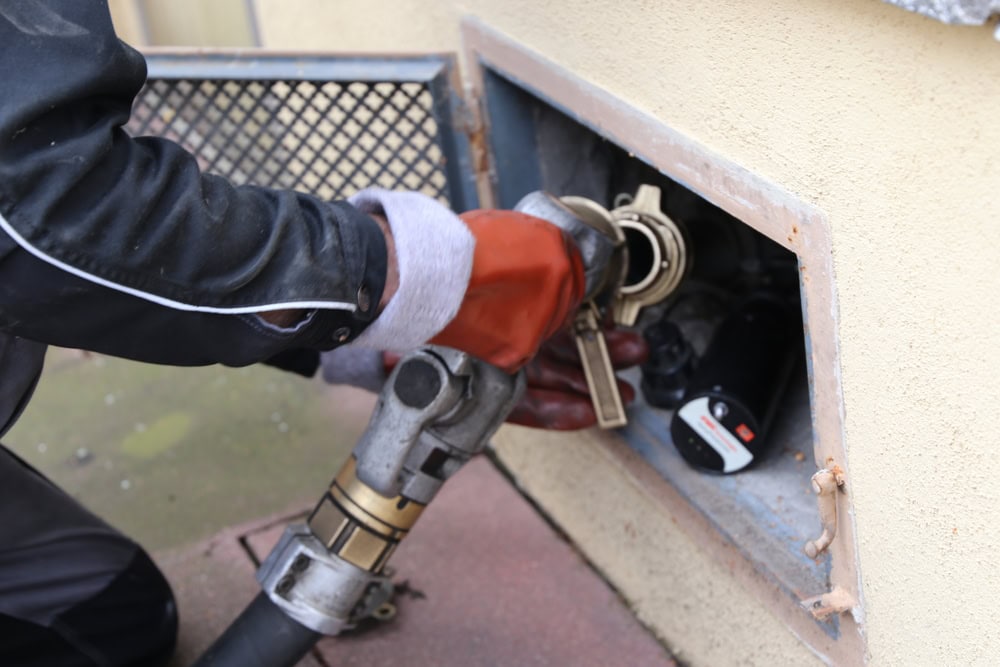
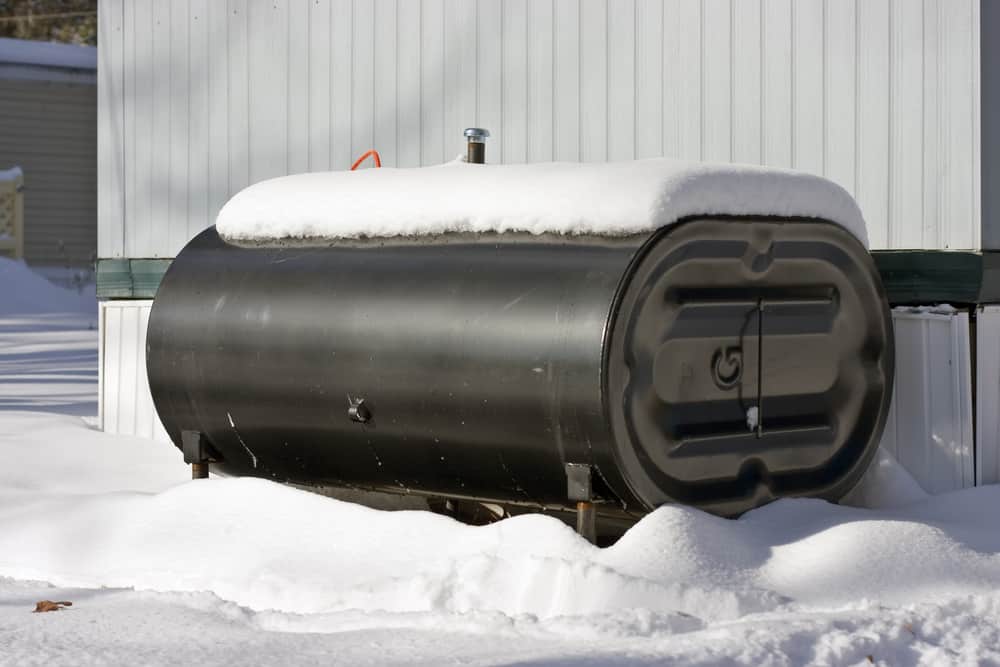
Running out of heating oil is the most common emergency call we receive, and it’s also the most preventable. But when it happens — and it does happen, often to people who’ve been monitoring the gauge and misjudged the burn rate during a cold snap — the process for getting fuel delivered fast is simpler than most people expect.
With our online ordering platform, you don’t need an account, a contract, or a prior relationship with us. You can place an emergency order at any hour, from your phone, without logging in. If you have our mobile app with stored payment, it’s even faster — under a minute from opening the app to a confirmed order. For Spanish-speaking customers, our ordering process is available in Spanish, because a heating emergency is stressful enough without a language barrier adding to it.
Same-day emergency delivery is available for customers who call or order early enough in the day. We deliver B5 Bioheat — the 5% biodiesel blend that Suffolk County law requires — so there’s no compliance issue and no risk of putting the wrong fuel in your system. That distinction matters more than it sounds: not every out-of-area provider carries the compliant blend, and using non-compliant fuel in a Suffolk County home isn’t just a regulatory issue, it can affect how your system runs.
We’ve been making deliveries across Suffolk County for over 50 years — from Huntington and Commack in the west to Montauk and Greenport at the far east end, and out to communities like Ocean Beach on Fire Island where the logistics are genuinely different. When you call us during a January nor’easter, you’re not talking to a dispatcher who’s routing a subcontractor from three counties away. You’re talking to people who know these roads and have been driving them in bad weather for decades.
One thing worth knowing: if your tank ran dry, the system may not restart automatically once it’s refilled. Air can get into the fuel line, and the burner may need to be bled and reset before it fires again. This is a common follow-up issue after a run-out, and it’s worth mentioning when you call so the right steps can be taken once delivery is complete.
Most homeowners think of a heating failure and a plumbing emergency as two separate problems. They’re not — at least not in a Suffolk County winter. The connection is straightforward: when indoor temperatures drop below 32°F, water in your pipes begins to freeze. In a home without heat, that can happen in as little as six hours on a night when it’s 15°F outside. And when a frozen pipe thaws — or bursts under pressure before it thaws — you’re dealing with water damage on top of a heating failure.
This is why emergency pipe repair situations in Suffolk County so often trace back to a heating outage that wasn’t addressed quickly enough. The burst pipe is what gets the homeowner’s attention, but the root cause was the hours of heat loss that preceded it.
If you’re already past the point of prevention and you suspect a pipe has frozen, don’t try to thaw it with an open flame or a high-heat source. A hair dryer on low, warm towels, or a portable space heater pointed at the exposed section of pipe are the safer approaches. Work from the faucet end back toward the frozen section, not the other way around, so that water has somewhere to go as the ice melts. If a pipe has already burst, shut off the main water supply valve immediately — typically located near the water meter — and call a licensed plumber.
In communities like Brentwood, Central Islip, and parts of Ronkonkoma where older housing stock is common, pipes running through exterior walls and uninsulated basements are especially vulnerable. If your home was built before 1980 and hasn’t had any plumbing updates, it’s worth knowing where your main shutoff is before you’re in a situation where you need it in a hurry.
The practical takeaway here is that restoring heat quickly isn’t just about comfort — it’s about stopping a chain of events that can get expensive fast. Getting fuel delivered or a system restarted the same night it fails is almost always cheaper than dealing with the water damage that follows a freeze. We can’t do the pipe repair, but we can make sure the heating side of the equation gets handled fast, which is usually what prevents the pipe problem from starting in the first place.
When your heat goes out on a cold night in Suffolk County, the most important thing you can do is act quickly and call us. Not a voicemail box. Not an answering service that takes a message and promises someone will call back. A real person who can place an order or dispatch help and give you a time window you can count on.
The difference between a stressful night and a genuine emergency often comes down to how fast the heat gets restored. Frozen pipes, CO risks, and hours of dropping indoor temperatures are all preventable — but only if the response is fast enough.
Consolidated Energy – Suffolk Oil has been handling emergency heating calls across Suffolk County for over 50 years. If you’re dealing with an empty tank, a system that won’t fire, or you’re just not sure what you’re looking at — reach out. We’re open 24 hours, and we’ll give you a straight answer about what you need and when we can get there.
Article details:
Share:
Continue learning: