
Summer is the best time to service your heating system — before fall slots fill up and the first cold snap catches you off guard.
Share:
Summary:
You’re not thinking about your heating system right now. It’s July, the AC is running, and winter feels like someone else’s problem. That’s exactly how most Long Island homeowners end up on the phone in November, waiting a week for a technician because every HVAC company in the area is fully booked.
Summer is actually the smartest time to service both your cooling and heating systems — not because it’s convenient, but because it works. Appointments are easier to get, problems get caught before they become emergencies, and you head into fall knowing your equipment is ready. Here’s what that actually looks like.
Long Island summers are genuinely hard on air conditioning systems. The heat index regularly pushes past 95°F in July and August, and the humidity — especially in coastal communities from Bay Shore to Southampton — creates conditions that accelerate wear in ways that drier climates simply don’t. Condensate drain lines clog faster. Evaporator coils accumulate biological growth more quickly. Filters get overwhelmed in weeks, not months.
The result is a system that works harder to deliver less comfort, all while running up your energy bill. A neglected AC unit can lose up to 25% of its efficiency over time — that’s real money disappearing every month it goes unserviced.
There’s a meaningful difference between what a homeowner can handle and what requires a licensed technician — and understanding that line saves you money and keeps your system protected.
On the homeowner side, filter replacement is the single most impactful thing you can do. In Suffolk County’s humid summers, filters in heavily used systems should be checked every 30 days and replaced at least every 60 to 90 days. A clogged filter doesn’t just reduce airflow — it forces the blower motor to work harder, raises energy consumption, and can cause the evaporator coil to freeze. It’s a $20 fix that prevents a $500 repair. You can also clear debris from around the outdoor condenser unit, gently rinse the fins with a garden hose, and make sure the area around it has at least two feet of clearance.
What you shouldn’t attempt yourself is anything involving refrigerant, electrical components, or the internal mechanics of the system. Federal law requires EPA Section 608 certification to handle refrigerants — it’s not just a best practice, it’s a legal requirement. Beyond that, checking refrigerant levels, inspecting the capacitor and contactor, testing the compressor, calibrating the thermostat, and clearing the condensate drain line properly all require both the tools and the training to do without causing damage.
A professional AC tune-up covers all of that. The technician tests the system under load, catches early-stage failures — a slow refrigerant leak, a capacitor that’s reading low, a drain line that’s partially blocked — and gives you a clear picture of where your system stands. For homes near the water in communities like Lloyd Harbor, North Haven, or Sound Beach, that inspection also catches salt-air corrosion on coils and electrical connections before it becomes a replacement conversation.
Most tune-ups take between one and two hours. The cost nationally runs $120 to $350. Our current special is $149.95 — regularly $249.95 — which puts professional service well within reach for most households.
Generic HVAC maintenance advice is written for an average climate. Suffolk County isn’t average. The combination of Atlantic Ocean proximity, Long Island Sound influence, and summer humidity levels that routinely exceed 70% creates conditions that accelerate equipment wear faster than most manufacturer guidelines account for.
Condensate drain lines are a good example. In a dry climate, a drain line might need clearing once a year. In a humid environment like Islip, Patchogue, or any waterfront community on the South Shore, algae and mold growth in the drain pan can partially block the line within a single season. When that happens, the system either shuts down on a safety switch or — worse — overflows into your ceiling or walls. It’s one of the most common preventable failures we see, and it’s entirely avoidable with a professional cleaning.
Coastal salt air is a separate issue that affects homes from Montauk to Copiague. The sodium chloride in sea air is corrosive to aluminum fins, copper refrigerant lines, and electrical terminals on outdoor units. If your condenser sits within a few miles of the water, annual inspection isn’t just recommended — it’s the difference between catching surface corrosion early and replacing a unit that failed from the inside out.
Filter replacement frequency is also higher in humid climates. The moisture in the air causes particulates to bind together and clog filters faster than they would in drier conditions. If you’ve been following a 90-day replacement schedule and your system still feels sluggish, try moving to 60 days and see if performance improves. For households with pets or anyone with respiratory sensitivities, 30-day replacement is worth the minimal added cost.
The underlying point is that Suffolk County homes need more attentive maintenance than the national average — not because the equipment is worse, but because the environment demands more from it.
Want live answers?
Connect with a Suffolk Oil expert for fast, friendly support.
Every October, the same thing happens across Suffolk County. Temperatures drop, someone turns on the heat for the first time, and something doesn’t work. The calls start flooding in — to every HVAC company from Huntington to Riverhead — and the wait times stretch from days to weeks. Parts are on backorder. Emergency service rates apply. And the homeowner who kept meaning to schedule a tune-up is now dealing with a crisis instead of a calendar entry.
Summer sidesteps all of that. Heating system technicians are less busy from June through August, which means faster appointments, more scheduling flexibility, and in many cases better pricing. Any parts that need replacing can be ordered and installed before cold weather arrives, not during it.

A proper oil furnace or boiler tune-up isn’t a quick walkaround. It’s a systematic inspection and cleaning that touches every component that affects performance, safety, and efficiency — and it’s the kind of work that pays for itself before the first heating bill of the season arrives.
The technician starts with the burner — cleaning it, adjusting the fuel-to-air ratio, and making sure combustion is clean and efficient. A burner running with a poor mixture wastes fuel and produces more soot, which accumulates on the heat exchanger and reduces efficiency further over time. From there, the heat exchanger itself gets inspected, which is one of the most important safety checks in the entire process. A cracked heat exchanger can allow combustion gases — including carbon monoxide — to enter the living space. It’s rare, but it’s the kind of thing that only gets caught by someone who’s actually looking.
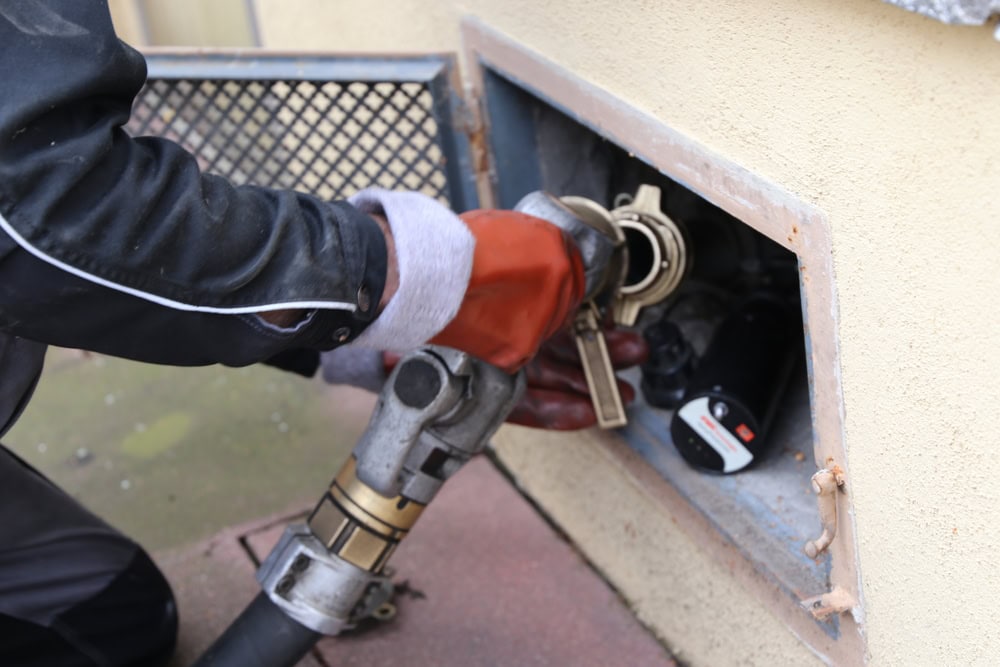
The nozzle and fuel filter get replaced, the oil pump pressure is checked, and the flue and chimney are inspected for blockages or deterioration. Safety controls — limit switches, pressure relief valves — are tested to confirm they’ll actually respond if something goes wrong. The blower or circulator gets inspected for wear, and the system goes through a combustion efficiency test that tells you exactly how much of your heating oil is being converted to usable heat versus going up the flue.
For Suffolk County homes, this matters in a specific way. New York State requires heating oil sold here to meet B5 biodiesel blend standards — a cleaner-burning formulation that’s better for the environment and generally gentler on equipment. But like any fuel system, it performs best when the components it runs through are clean and properly adjusted. A tune-up that accounts for the B5 blend ensures your system is calibrated to get the most out of the fuel you’re buying.
Most homeowners who schedule summer heating system service notice the difference in their first heating bill of the season. A system running at full efficiency uses less fuel to deliver the same warmth — and in a Suffolk County winter that runs from October through April, that efficiency gap adds up quickly.
**How often should I have my HVAC system serviced?** The industry standard is twice a year — once in spring for your cooling system and once in fall for your heating system. For Long Island homeowners in Suffolk County, we’d add a third consideration: if you’ve gone more than a year without either service, summer is a good time to catch up on both. The coastal humidity and salt air here accelerate wear faster than the national average, so annual service isn’t optional — it’s the minimum.
**What happens if I skip a year?** Maintenance is cumulative in both directions. A year of skipped service means a year of accumulated dust on coils, biological growth in drain pans, and undetected wear on components like capacitors and contactors. Two or three years without a tune-up can turn what would have been a $150 service call into a $1,500 repair — or a full system replacement. The homeowners who actually schedule preventive maintenance avoid the majority of emergency calls. The rest are the ones calling in January.
**Does HVAC maintenance affect my warranty?** Most manufacturers require documented annual maintenance to keep the warranty valid. Skipping service doesn’t just risk a breakdown — it can void coverage on a system worth $5,000 to $15,000. If you’ve ever had a warranty claim denied, this is often why.
**I’m in Smithtown — is summer really a good time to book a heating tune-up?** Yes, and it’s one of the best things you can do before the season turns. Fall appointment slots in Smithtown, Commack, Saint James, and across western Suffolk fill up fast once temperatures start dropping. Booking in July or August means you get a convenient time slot, a technician who isn’t rushing between emergency calls, and the peace of mind that your system is ready well before the first nor’easter rolls through. We’ve been doing this for over 50 years, and the homeowners who call us in summer are never the ones calling us in a panic in November.
**What can I do myself, and what should I leave to a professional?** Filter replacement, clearing debris from the outdoor unit, and keeping vents unobstructed are all reasonable DIY tasks. Anything involving refrigerant, electrical components, combustion systems, or the internal mechanics of the unit should be handled by a licensed technician. It’s not about capability — it’s about safety, legality, and protecting your equipment from well-intentioned mistakes.
The case for summer HVAC maintenance isn’t complicated. Your cooling system is working hard right now and deserves a professional look before the season peaks. Your heating system is sitting idle — which makes it the perfect time to clean it, inspect it, and make sure it’s ready before October arrives and every HVAC company on Long Island is booked solid.
A tune-up that costs $149.95 today is a straightforward alternative to a $500 emergency repair or a $10,000 system replacement down the road. And for Suffolk County homeowners dealing with coastal humidity, salt air, and nor’easters that don’t give much warning, “I’ll schedule it next month” has a way of becoming a very expensive decision.
If you’re ready to get your system serviced before the season changes, we at Consolidated Energy – Suffolk Oil have been helping Long Island homeowners do exactly that for over 50 years. Reach out to us — we make it easy.
Article details:
Share:
Continue learning: