Calculate your daily heating oil consumption with factors like home size, temperature, and tank capacity to avoid winter runouts.
Share:
Summary:
The average US household uses about 500 gallons between October and March (182 days), which breaks down to roughly 2.75 gallons of oil each day. But that’s just a starting point for Suffolk County homes.
Your actual consumption depends on several key factors that make each home unique. The amount of heating oil a household uses daily depends on the size of the house, outside temperature, inside temperature preferences, and heating system efficiency.
Heating oil consumption varies based on home size, climate, insulation, and heating system efficiency, with the average home using between 500 and 1,200 gallons per year.

Home size plays a significant role in oil usage, with rough estimates showing small homes (1,000-1,500 sq ft) using 400-800 gallons per year, medium homes (1,500-2,500 sq ft) using 800-1,200 gallons per year, and large homes (2,500+ sq ft) using 1,200+ gallons per year.
But square footage alone doesn’t tell the whole story. Your home’s size is a primary factor, but it’s not just about area—the house’s design, including overall volume, wall thickness, and insulation quality, plays an essential role in fuel efficiency.
While the average US home measures 2,687 square feet, your home may be larger or smaller, impacting daily fuel needs. For a 3,500-square-foot home, you’d need approximately 5.15 gallons of heating oil on a 40°F day.
Think about your home’s layout too. The design and size directly impact how much heating oil is required, with bigger homes needing more fuel than smaller ones, even at the same outdoor temperatures. It’s not just square footage but also the volume of interior space, plus sufficient insulation and exterior wall thickness.
Home size plays a significant role in oil usage, with rough estimates showing small homes (1,000-1,500 sq ft) using 400-800 gallons per year, medium homes (1,500-2,500 sq ft) using 800-1,200 gallons per year, and large homes (2,500+ sq ft) using 1,200+ gallons per year.
But square footage alone doesn’t tell the whole story. Your home’s size is a primary factor, but it’s not just about area—the house’s design, including overall volume, wall thickness, and insulation quality, plays an essential role in fuel efficiency.
While the average US home measures 2,687 square feet, your home may be larger or smaller, impacting daily fuel needs. For a 3,500-square-foot home, you’d need approximately 5.15 gallons of heating oil on a 40°F day.
Think about your home’s layout too. The design and size directly impact how much heating oil is required, with bigger homes needing more fuel than smaller ones, even at the same outdoor temperatures. It’s not just square footage but also the volume of interior space, plus sufficient insulation and exterior wall thickness.
Want live answers?
Connect with a Suffolk Oil expert for fast, friendly support.
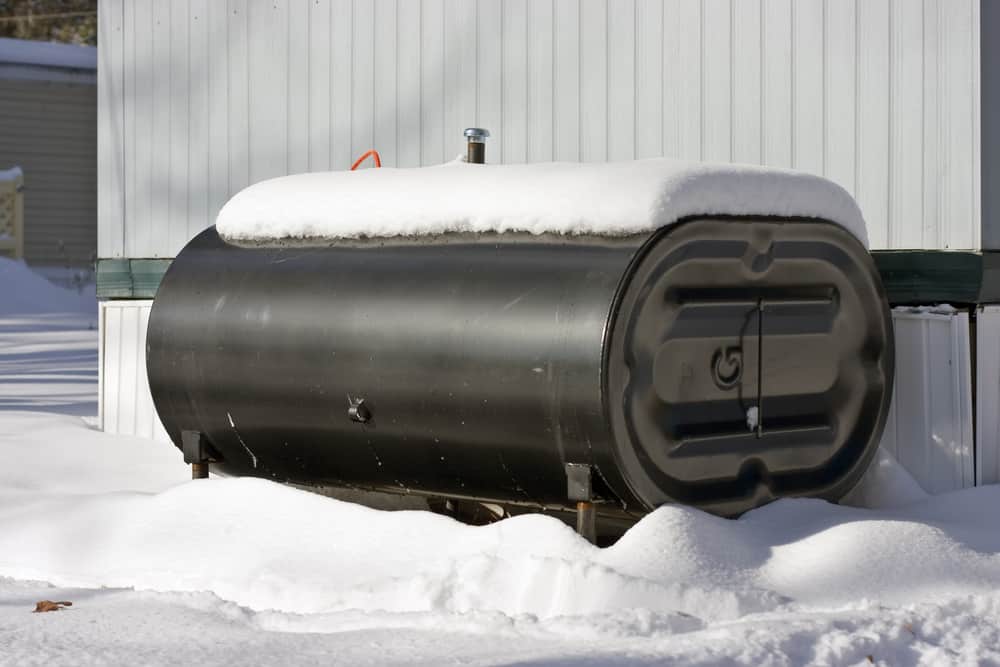
Most homeowners have 275-gallon tanks (the most common size), but a “full” tank actually contains about 240-250 gallons of heating oil due to safety expansion space. Understanding this difference is crucial for accurate delivery timing.
When your tank gauge reads “½”, you actually only have about 120 gallons left, not 135-140, which can significantly impact when to order heating oil if you want to avoid a run-out.
An industry rule-of-thumb shows that one or two-bedroom homes at 2,500 sq ft or less typically require a 275-gallon heating oil tank, while three- or four-bedroom homes or homes larger than 2,500 sq ft need a 300 to 500-gallon tank.
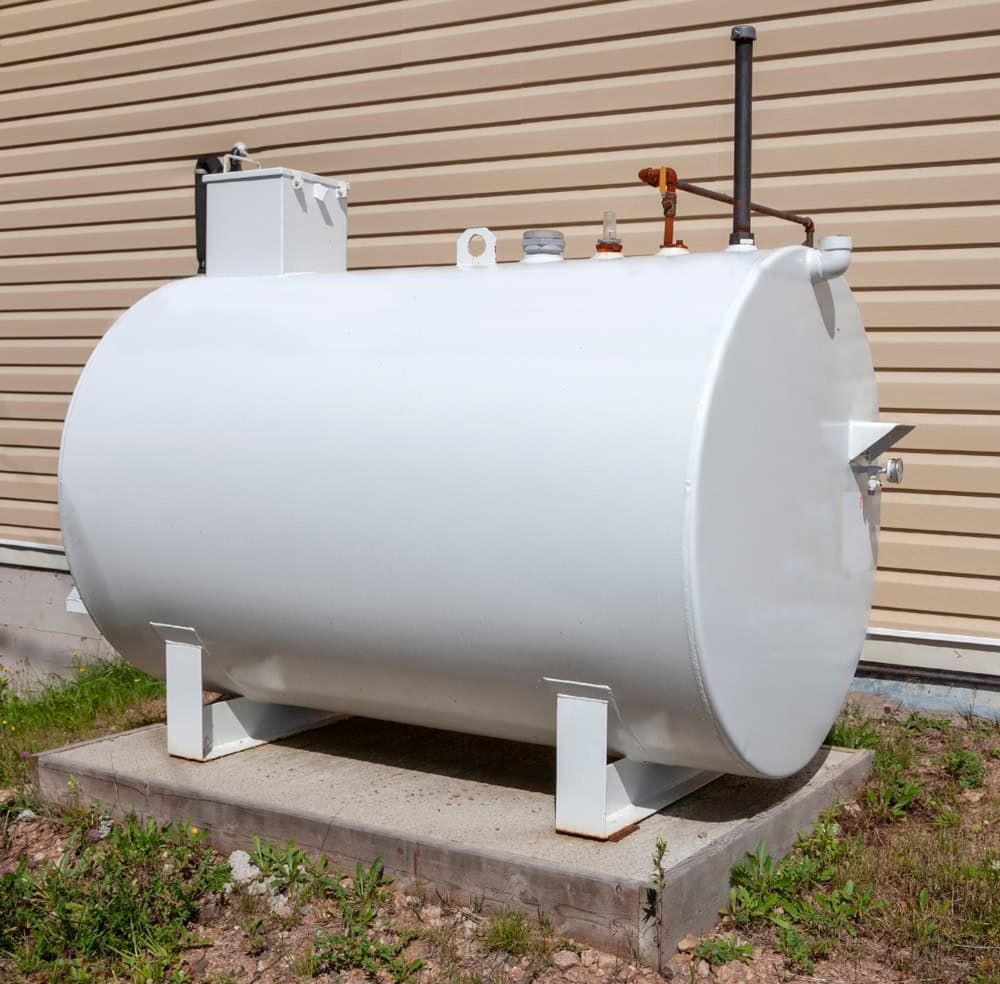
For example, if you have a 275-gallon oil tank and use about 2.75 gallons of heating oil each day, the fuel in the tank will last about 100 days. But this assumes consistent mild conditions.
Let’s consider a typical oil tank with 275-gallon capacity for a 3,500 square foot house—you’d consume roughly 5.15 gallons of heating oil during a typical 40-degree day. That changes your timing calculations significantly.
During winter season, daily oil consumption varies, with a 2,000 sq ft home estimated to use around 2.75 to 3 gallons per day. To calculate for the whole season, consider the duration of your local heating season and multiply that by your daily usage estimation.
The smart approach involves tracking your patterns. Track your yearly fuel consumption to calculate your average annual, monthly, and daily heating oil needs—this historical data provides a reliable benchmark for planning future oil deliveries.
A tank of oil might last for different durations at the start versus end of cold season. If temperatures in October and November are considerably warmer than January and February, you’ll find it takes longer to use fuel during late fall compared to winter’s depths.
Though water heaters commonly use propane, electricity, or natural gas, some use heating oil. If you’re heating both your home and water with oil, recalibrations are needed—water heaters typically use 0.5 to 1.0 gallons of heating oil daily, influenced by household size and frequency of warm showers.
If your home uses heating oil for the furnace as well as to heat water, you’ll need to factor this into your calculations. A water heater uses about 0.5-1.0 gallons of oil each day, with the amount depending on home size and daily water usage.
Water heaters commonly run on propane, electricity, natural gas, or heating oil. If your home uses heating oil for both space and water heating, it’s crucial to account for additional fuel consumption. Water heaters use between 0.5 to 1.0 gallons of heating oil per day, varying by household size, water heater capacity, and daily hot water usage.
This additional consumption adds up over time. For a family that uses significant hot water, you might add 25-30 gallons per month to your baseline consumption calculations. Factor this into your delivery timing, especially during winter when hot showers become more frequent and longer.
Knowing about how much fuel you use each day helps you figure out how long oil in your tank will last. Tank size, weather conditions, and personal preferences affect duration, and you can use a heating oil consumption calculator or crunch the numbers yourself.
Understanding your annual heating oil consumption helps you plan deliveries, budget for fuel costs, and improve energy efficiency. The key is developing a system that works reliably for your specific situation.
Your daily heating oil requirements can be estimated from factors like outdoor temperature, home size, and past records. If you’re new to the area, we’re always available to provide reliable estimates. At Suffolk Oil, we bring over 50 years of local experience to help you get these calculations right from the start.
Continue learning: