What does heating repair actually cost on Long Island? Here's what Suffolk County homeowners should expect — before the bill arrives.
Share:
Summary:
Your heat stops working. It’s January. You have no idea what the repair is going to cost or whether you should fix it or replace the whole system. That’s a stressful place to be — and it’s exactly where a lot of Suffolk County homeowners find themselves every winter.
The good news is that most heating repairs aren’t as catastrophic as they feel in the moment. The bad news is that without some context, it’s easy to walk into a service call without knowing what’s fair. This guide covers what heating repair actually costs in Suffolk County, what pushes prices higher, and what you can do right now to reduce the chances of ending up in that situation at all.
Most common heating repairs across Suffolk County fall somewhere between $150 and $500. That range covers the calls that get resolved in a single visit — a faulty thermostat, a worn ignitor, a dirty flame sensor, a clogged nozzle. These are the repairs that feel dramatic when they happen but are usually straightforward for our technicians to fix.
More involved repairs — replacing a blower motor, a draft inducer, or a circuit board — typically run $300 to $900 depending on the part and the system. At the top end, something like a cracked heat exchanger can cost $1,000 to $3,500. That’s also the repair that carries a carbon monoxide risk if left unaddressed, which is why it’s not something to put off.
Diagnostic service calls in Suffolk County generally run $89 to $150, and we apply that fee toward the repair cost if you move forward with the work. If a company isn’t willing to do that, it’s worth asking why.

If your home runs on heating oil — and a large share of Long Island homes do — you should expect repair costs to run slightly higher than what you’d see quoted for gas systems. Oil furnace repairs typically range from $200 to $1,400, compared to $100 to $480 for gas. That gap exists for a few reasons, and it’s worth understanding them so the number doesn’t catch you off guard.
Oil-burning equipment uses components that gas systems don’t — nozzles, electrodes, oil pumps, fuel filters, and burner assemblies that require a technician specifically trained and certified in oil burner service. That’s a specialty that fewer companies offer than you might expect. When you call around in December and find that a company doesn’t service oil systems, it’s because oil burner work genuinely requires different training and equipment.
Suffolk County’s coastal environment adds another layer. Salt air — whether you’re in Babylon, Bay Shore, Sound Beach, or anywhere near the water — accelerates corrosion on metal components inside and around your heating system. Heat exchangers, burner housings, and flue connections all corrode faster here than they would in an inland market. It means systems here sometimes need attention sooner than their rated lifespan would suggest, and it’s one reason why skipping annual service isn’t a great idea in this specific climate.
New York State also requires that heating oil delivered in Suffolk County be a B5 biodiesel blend — 5% biodiesel mixed with standard #2 fuel. The blend burns cleaner, which is actually good for your equipment over time. Less soot buildup means cleaner nozzles and a system that runs more efficiently. But it also means the technician you call should be familiar with B5-compatible systems, not just generic oil burner work.
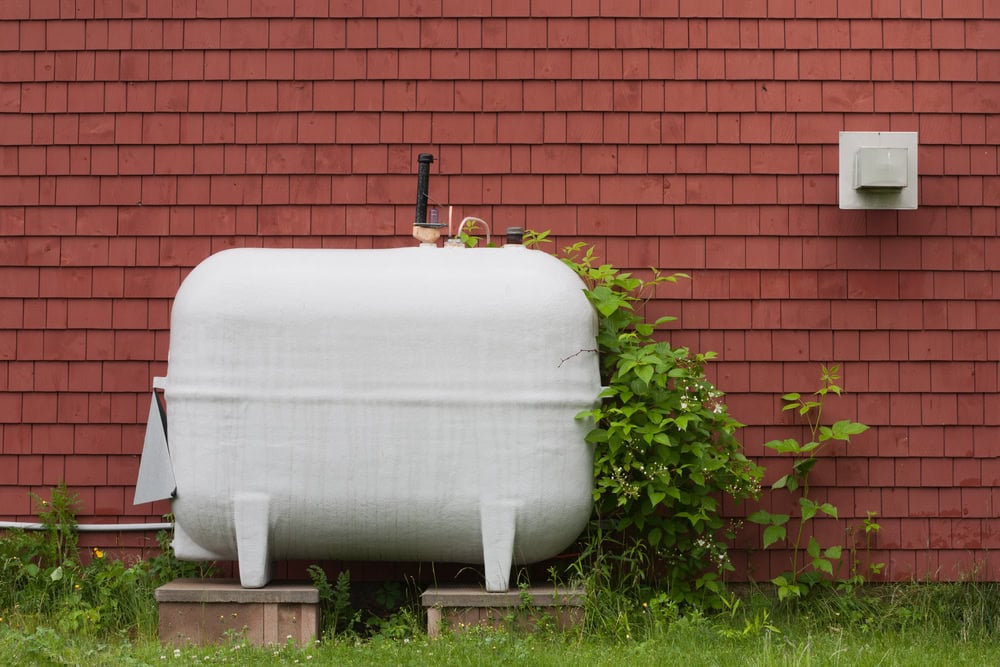
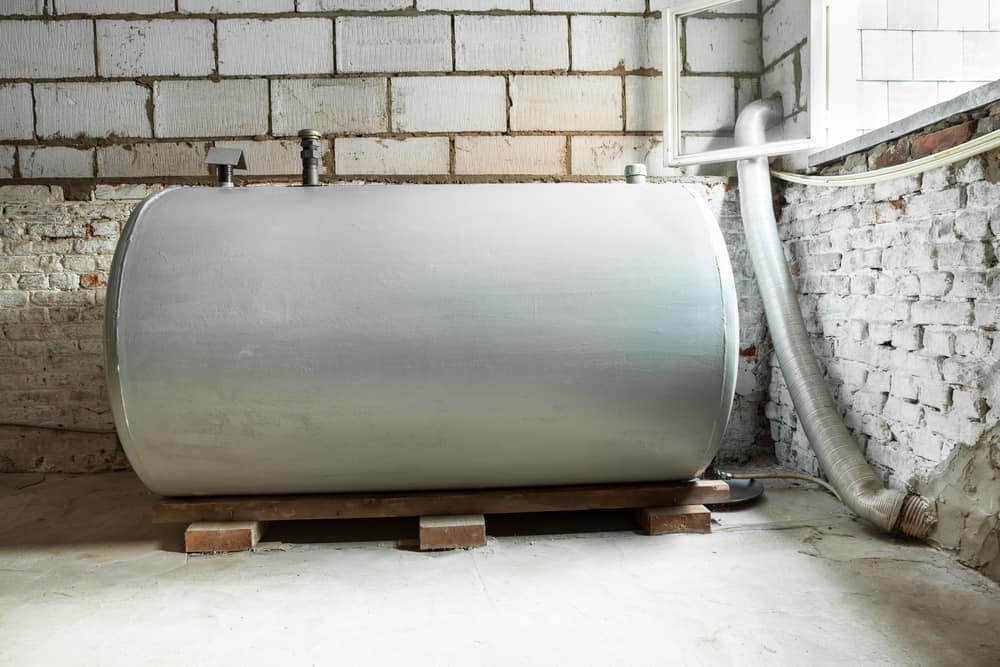
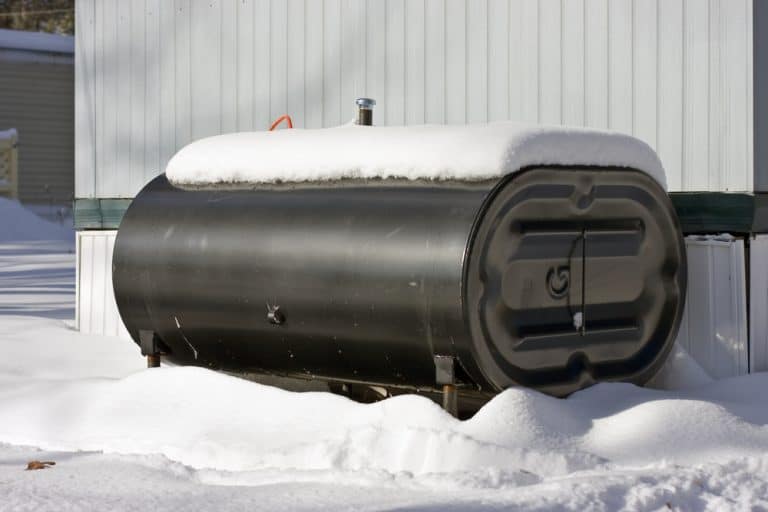
There’s a scenario that comes up more often than most homeowners realize, and it’s one that ends up costing significantly more than it needs to. When an oil-heated home runs the tank completely dry, the burner pulls air into the fuel line. That causes the system to lock out — it shuts itself down and won’t restart on its own, even after you refuel. At that point, you need a technician to bleed the fuel lines and manually restart the system. That’s a service call on top of your emergency fuel delivery.
The cost of that service call varies, but it adds real money to an already stressful situation. And it’s entirely preventable. Keeping an eye on your tank level — especially heading into a cold stretch or a nor’easter — is one of the simplest things you can do to avoid it. Automatic delivery takes that responsibility off your plate entirely by tracking your usage patterns and weather conditions and scheduling deliveries before you get close to running out.
It’s also worth knowing that systems which run dry repeatedly tend to develop fuel line and filter issues faster than systems that are kept properly supplied. The air exposure accelerates wear on components that are designed to stay submerged in fuel. It’s a small thing that compounds over time into a repair bill that feels disproportionate to the original problem.
If you’re ever in that situation — heat’s off, tank’s empty, system won’t restart — the fastest path forward is getting fuel delivered same day and having a certified oil burner technician bleed the system. Trying to restart it yourself without bleeding the lines typically just results in repeated lockouts and a longer wait in the cold.
Want live answers?
Connect with a Suffolk Oil expert for fast, friendly support.
Standard HVAC labor rates in this area run $75 to $150 per hour during normal business hours. After hours, on weekends, or on holidays, that rate climbs to $140 to $210 per hour — and we tack on an additional emergency surcharge of $100 to $250 on top of that. So a repair that costs $300 on a Tuesday afternoon might run $500 or more on a Saturday night in February.
That reflects the real cost of staffing technicians around the clock during peak demand. Understanding what triggers emergency pricing can help you make smarter decisions about when to call and what to expect when you do.
When a company tells you “emergency rates apply,” that phrase can mean almost anything. Across Suffolk County, the typical after-hours surcharge falls between $100 and $250 on top of the standard service call fee. We tell you the emergency rate upfront — before anyone gets in a truck — so you know exactly what you’re paying.
We also apply the diagnostic fee toward the repair. You pay $89 to $150 for the technician to diagnose the problem, and if you approve the repair, that fee comes off the total. If a company charges a diagnostic fee and then quotes the repair on top of it without any credit, push back or get a second opinion.
The scenarios that drive the most emergency calls in Suffolk County are predictable. The first cold snap of fall — usually October or early November — catches systems that sat idle all summer and reveals whatever went unnoticed. Nor’easters create sudden temperature drops that push systems harder than they’ve run all season. And January and February, when temperatures in Huntington, Smithtown, and Brookhaven regularly drop into the single digits during polar vortex events, are when demand peaks and wait times stretch.
If your system is older — say, 12 to 15 years or more — it’s worth having a conversation with a technician about whether repair still makes sense. The general rule of thumb is that if the repair cost exceeds about 30% of what a new system would cost, replacement is worth considering seriously. That math changes depending on how many years you realistically expect to get out of the existing equipment.
The most reliable way to avoid a $500 emergency call is to spend $150 before you need one. An annual heating tune-up — done in the fall before the season starts — gives a certified technician the chance to catch small problems before they become large ones. A worn ignitor, a dirty nozzle, a sensor that’s reading slightly off — these are inexpensive fixes when caught early. Left alone, they’re the things that cause your system to shut down at 11 p.m. on a Thursday in January.
We offer a tune-up special at $149.95 — regularly $249.95 — that covers a thorough inspection and service of your oil heating system. For a home in Coram, Deer Park, Brentwood, or anywhere else across Suffolk County, that’s a straightforward investment with a clear payoff. A well-maintained oil furnace can run reliably for 15 to 25 years. One that’s been neglected tends to fail well short of that, and the repair costs along the way are rarely small.
Beyond the annual tune-up, a few habits make a real difference. Keep your tank from running low — especially before a storm. Change your air filter on schedule. Don’t ignore unusual sounds or smells from your heating system. A furnace that’s cycling on and off more than usual, producing less heat than it should, or making a new noise is telling you something. Calling before it becomes an emergency is almost always cheaper than calling after.
The B5 biodiesel blend required in Suffolk County burns cleaner than standard #2 fuel, which means less buildup on burner components over time. That’s a real benefit, but it doesn’t replace regular service. Cleaner-burning fuel slows the rate of wear; it doesn’t eliminate it.
One thing that often gets overlooked: if you’re on automatic delivery and your tank is consistently topped off before it gets low, you’re already removing one of the most common causes of emergency service calls. Keeping fuel in the tank is genuinely part of maintaining the system — not just a fuel issue.
Most heating emergencies are predictable in hindsight. A system that hasn’t been serviced in a few years, a tank that ran low during the last cold snap, a minor repair that got put off — these are the things that turn into expensive, stressful nights without heat. The costs are real, but they’re also largely avoidable with a little planning.
Common repairs in Suffolk County run $150 to $500 for most calls. Emergency and after-hours service adds $100 to $250 on top of standard rates. Oil furnace work costs more than gas and requires a specialist. And running your tank dry can turn a fuel delivery into a service call. Those are the numbers worth keeping in mind.
If you want to get ahead of it rather than react to it, Consolidated Energy – Suffolk Oil has been helping Long Island homeowners do exactly that for over 50 years. Whether it’s a scheduled tune-up, automatic delivery to keep your tank from running low, or a same-day emergency delivery when you need it most — we’re here, we’re local, and we’re available around the clock.
Article details:
Share:
Continue learning: