A quarter tank sounds like breathing room, but in a Suffolk County winter it can mean about ten days of oil. Here's how to read the gauge and plan around it.
Share:

Summary:
You head down to the basement, glance at the little dial on your tank, and the needle is sitting somewhere near the bottom quarter. Is that fine? Should you have ordered last week? Most people who heat with oil in Suffolk County, NY never get a real explanation, especially if the tank came with the house.
About four in ten homes in the county run on oil, so a lot of people are squinting at that same dial. The short version is that your gauge is useful but approximate, and a quarter tank buys you less time than it sounds like. Here’s how to read it, what’s actually left in there, and when to place your order.
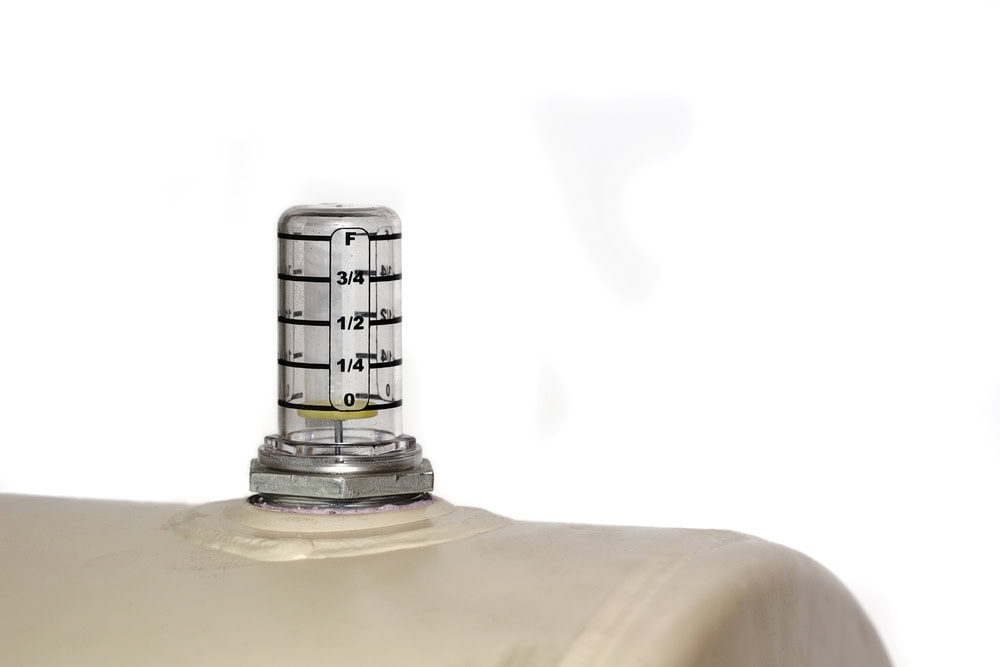
Most home tanks use a float gauge. A float rides on top of the oil inside the tank, and a small arm carries that movement to a dial on the lid marked F, 3/4, 1/2, 1/4 and E. Read it straight on and in decent light. A fogged lens or a sideways glance can make the needle look a notch off.
Treat what you see as an estimate. It tells you roughly where you stand, not exactly how many gallons are in there. The meter on the delivery truck is the legal measure of what you receive, and truck meters in New York get inspected every year. Your dial doesn’t get that treatment, which is fine as long as you know what you’re looking at.
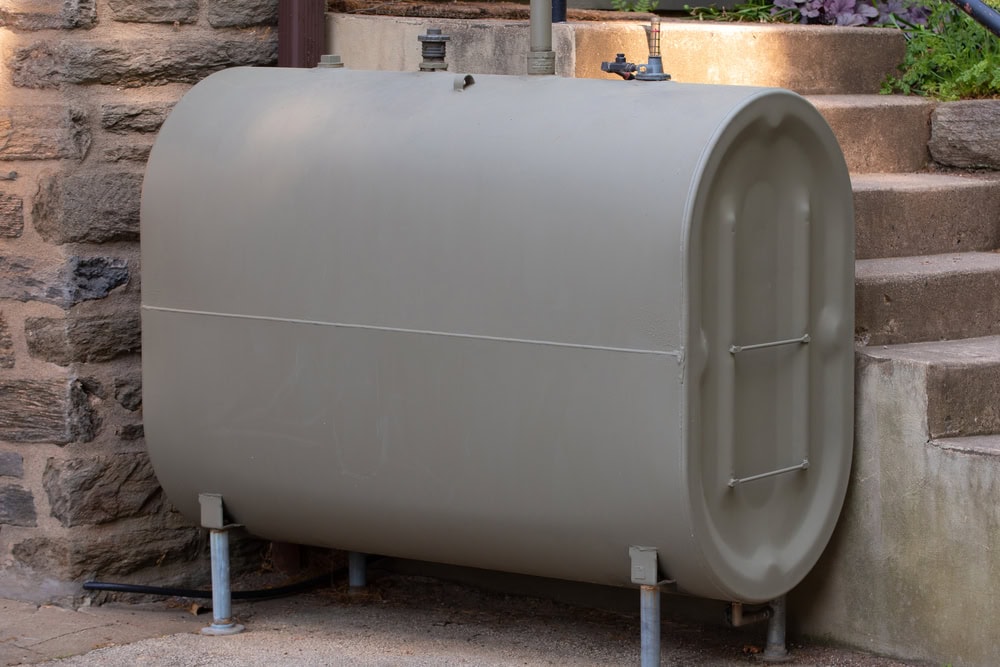
Across Suffolk County, most post-war ranches and colonials have a 275-gallon tank in a basement or utility room. That’s the tank we’ll use for the math below.
This is where the dial fools people. A quarter of a 275-gallon tank works out to about 69 gallons, and that’s the number you’ll see in most guides. But 275 is the tank’s nominal size. Once you leave room for expansion and the vent alarm, a fresh fill usually lands somewhere around 225 to 250 gallons, depending on the tank. So a quarter on the dial is a little less than 69 usable gallons, and the needle tends to drop faster near the bottom because of the tank’s rounded shape.
Now turn gallons into days. A home of around 2,500 square feet burns roughly 6 to 7 gallons a day when it’s about 32 degrees out. At that pace, 69 gallons lasts about ten days, and fewer when the temperature drops. Winters in Suffolk County average around 28 degrees, with real swings from one year to the next, so ten days is the generous version of the story. A half tank, about 138 gallons, is closer to three weeks at the same rate.
Set that against delivery. Normal windows run one to two business days, and when a nor’easter is coming, everyone on your street is calling the same morning. A quarter tank on a Thursday, with a cold weekend ahead, is not a comfortable place to be.
One more thing: “empty” is never fully empty. Some sources put the unusable oil and sludge at about 4 to 6 inches in the bottom of the tank, and others say roughly 10 gallons. Don’t plan on any of it.
The other classic is the needle that hasn’t budged in weeks. Sometimes that’s legitimate. A mild stretch in October and a system that barely ran will do it. But in the middle of a Suffolk County winter, a gauge parked on one number is more often a warning than good news. The float may be stuck, and then the dial is telling you about the last time it moved, not about today.
Here’s the quick test. If there’s an outer cover, take it off. Gently push the float down with a finger and let go. It should rise back smoothly and the needle should follow. If it sticks, try rotating the gauge a little or lightly tapping it, and wipe off any grime or residue around it. Cleaning and a little movement fix a surprising number of sticky gauges.
Once you’ve confirmed the float moves, you can cross-check it. A ruler or dipstick measured against a chart for your tank size gives you a closer read than the dial alone. It takes a couple of minutes and it’s worth doing once, just so you know how your particular dial relates to what’s really in there. Some tanks read a little high or low, and now you’ll know which.
Only do what you’re comfortable doing, and leave the rest to a professional. If you smell oil, see dampness around the tank or lines, or notice anything else that looks wrong, stop and call someone to take a look.
Want live answers?
Connect with a Suffolk Oil expert for fast, friendly support.
Our rule of thumb is simple. In winter, order when the dial gets to a quarter, and a little sooner if a cold snap or storm is in the forecast. That timing leaves you room for the delivery window, a busy week, or a gauge that turns out to be a few gallons optimistic.
When you buy oil as you need it, you’re the monitor. Nobody is watching your tank for you, and there’s no contract to read. We think that’s a good trade, and checking the dial every week or two is all it takes to make it work. Automatic delivery is treated as a contract under New York rules, so if you ever go that route, read the terms closely.
When you’re ready, our online ordering is open 24/7 for same and next day delivery, with no account, login, or hold time. We can’t promise to beat a nor’easter, which is exactly why the quarter mark is a better trigger than the last gallon.
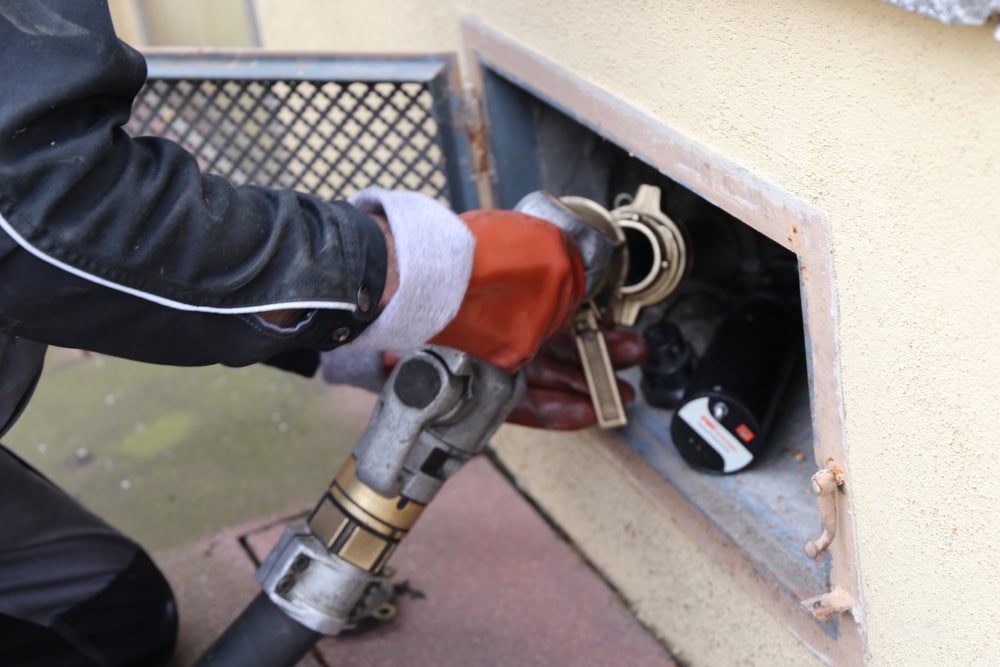
Think of it as capacity minus what’s already in there. If a full tank holds about 225 to 250 gallons and you have roughly 69 left, the tank will take somewhere around 155 to 180 gallons. That’s an estimate, not a promise, since every tank and gauge is a little different. What matters is that asking for 275 gallons won’t work, because it won’t fit. You’ll pay for what the truck’s meter says it delivered.
Timing matters for cost too. Our own look at the heating season shows that the gap between a summer fill and a January fill can easily top fifty cents a gallon. So the gauge is worth a glance in spring and summer as well. A tank that’s well stocked heading into October gives you cushion if November turns cold early.
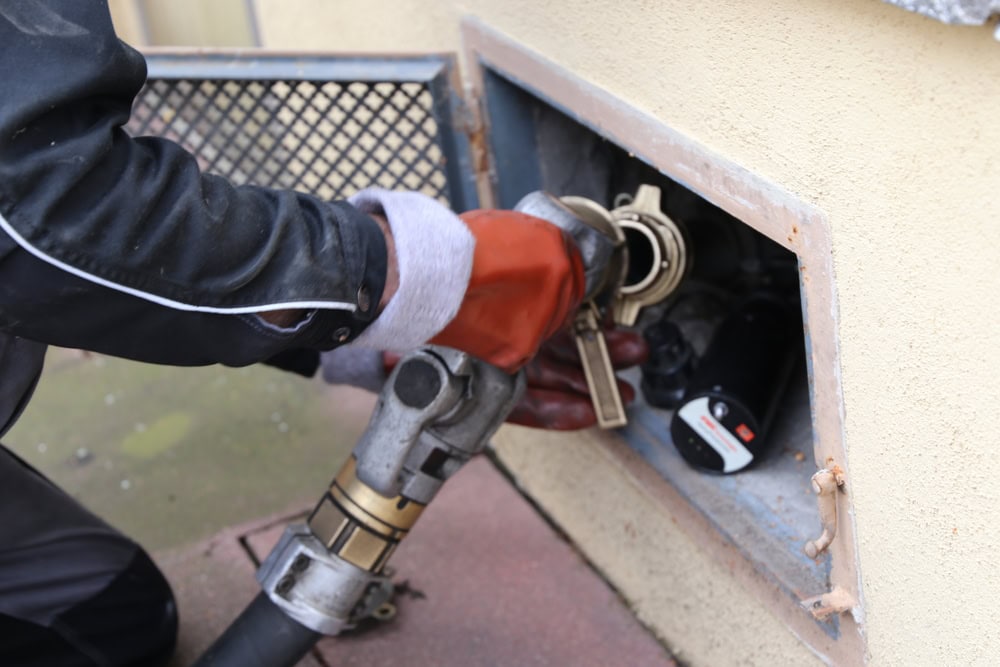
Then verify the delivery. Jot down where the needle sat before the truck arrived and where it sits afterward, and read the delivery ticket. If the numbers don’t seem to line up, ask. We wrote a whole post on this, called “Verify Your Oil Delivery: Prevent Shorting Scams,” and it’s worth a read.
If you waited too long, an emergency delivery may include an additional charge. We tell you the exact cost upfront, so you’re not surprised by your bill. You can order online at any hour or call us at 631-924-4030.
A few questions come up again and again, so here are plain answers.
Is an oil tank monitor worth it? It depends on how often you’re standing near the tank. A Wi-Fi monitor can send readings to your phone, which helps if the tank is tucked away or you travel a lot. It has limits, though. One single-sensor model reads a 275-gallon vertical tank only up to 235 gallons, so a fresh fill shows 235 until you burn some oil. Treat a monitor as a second opinion, not a replacement for knowing your tank.
What if I have two tanks linked together? One gauge is reading for both, so a quarter means roughly a quarter of the combined oil, about 137 gallons across a pair of 275s. That’s more cushion than a single tank, but it’s still an estimate, and you burn through it at the same daily rate.
What if I only get out to a house in Montauk or Orient on weekends? Then you can’t glance at a dial on a Tuesday. Check the gauge every time you visit, and before you lock up for the season. A remote monitor makes more sense for you than for most people. Our service area runs from Amityville and Babylon out to Montauk and Orient, plus Fishers Island, and you can order from wherever you happen to be.
What happens if the tank runs dry? Order right away and be upfront that it’s urgent. In Suffolk County, where about four in ten homes depend on oil and gas lines don’t reach many eastern communities, there’s rarely a backup heat source. We now offer heating service as well, in case the system needs attention afterward.
Your oil tank gauge is a good guide as long as you treat it as an estimate. A 275-gallon tank doesn’t hold 275 gallons, a quarter on the dial is a bit under 69, and in a Suffolk County winter that can be about ten days of oil. Push the float once in a while to make sure it’s moving, and order at a quarter, not at empty.
Take a minute this week to walk down and look at yours. If it’s near the bottom, or you can’t tell what it’s saying, Consolidated Energy – Suffolk Oil is here to help you work out how much you need and get it on the way, any hour of the day.
Article details:
Share:
Continue learning: