
A tune-up isn't a tune-up if you can't see the proof. Here's what belongs on the checklist, what Suffolk County homeowners pay, and when to book.
Share:
Summary:
If your oil burner is running fine, a tune-up is easy to put off. Then September rolls around, a neighbor mentions their technician was in and out in twenty minutes, and you start wondering what you’d actually be paying for. That’s a fair question. Across Suffolk County, roughly four in ten homes heat with oil, yet most people never learn what a tune-up should include, what it should cost, or what proof they’re entitled to when it’s over. We’ll walk through all three here, starting with what happens when one of our technicians opens up your burner.
A proper oil burner service starts with the parts that wear out: a new nozzle, a fresh oil filter, and a cleaned or replaced pump strainer. From there our technician cleans and adjusts the electrodes, checks the ignition transformer, and brushes and vacuums the heat exchanger, combustion chamber, and flue, so soot isn’t sitting between your flame and your house. Controls and safety switches get tested, motors get lubricated, and the oil line gets cleared.
Then comes the step that separates a real tune-up from a quick swap: a combustion analysis. Plan on about 90 minutes for the whole visit, and most technicians will take somewhere between one and two hours. If your burner was serviced in twenty minutes, something got skipped.
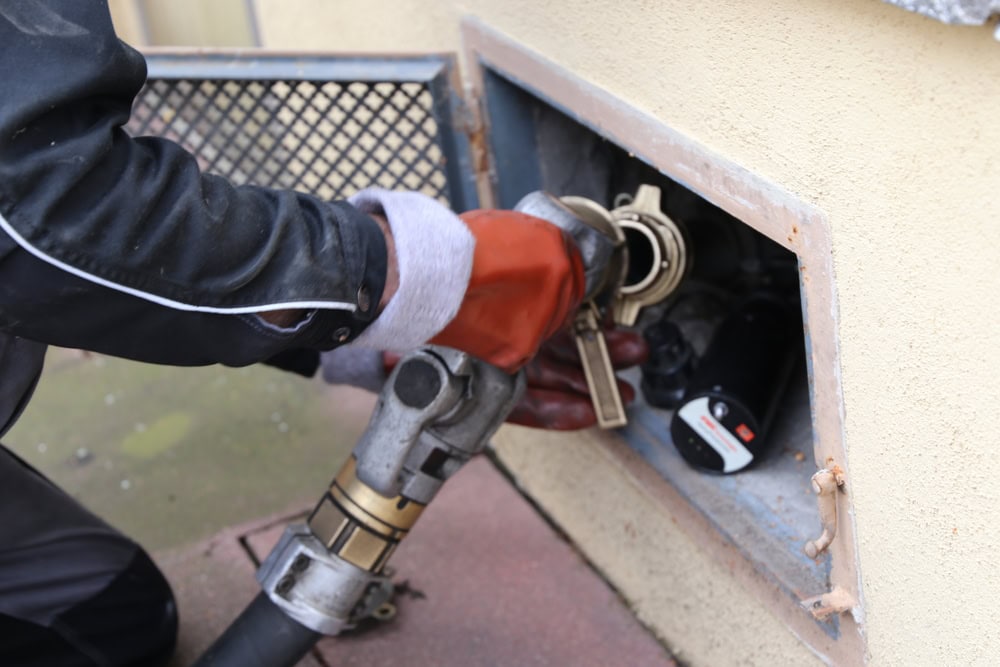
Here’s the part nobody advertises. Homeowners in oil-heat forums tell the same story again and again: the technician showed up, changed the nozzle and filter, announced the system was running great, and left. No numbers, no paperwork. One person was told their burner was running at an impressive efficiency figure and never saw a single reading behind it. A nozzle-and-filter swap is the minimum. It isn’t the whole job.
The proof is a combustion readout. The analyzer samples your exhaust and shows carbon dioxide or oxygen, smoke, stack temperature, and draft. Those numbers tell the technician whether the new nozzle is burning cleanly, and they tell you the work was measured instead of eyeballed. Ask for a copy before the truck leaves your driveway, and ask what the readings were before the adjustments as well as after.
Beyond the readout, you should walk away knowing which parts were replaced, what was cleaned, and whether anything needs attention down the road. If something does, it should come with a price before any work starts. We’d rather you ask all of this when you book through us than wonder about it in October. You’ll find DIY threads that put the parts at under $80, and swapping a nozzle isn’t hard. Setting the combustion without a calibrated analyzer is guesswork, though, and that’s the piece worth paying for.
Oil boiler service and an oil furnace tune-up share the same burner work, so the nozzle, filter, strainer, and combustion test don’t change. What changes is everything the burner is attached to. A boiler, common in Suffolk County homes with hot-water baseboard, adds checks like the low-water cutoff. A forced-air furnace adds the blower, belts, and air filter. If a company quotes you without asking which one you have, that tells you something.
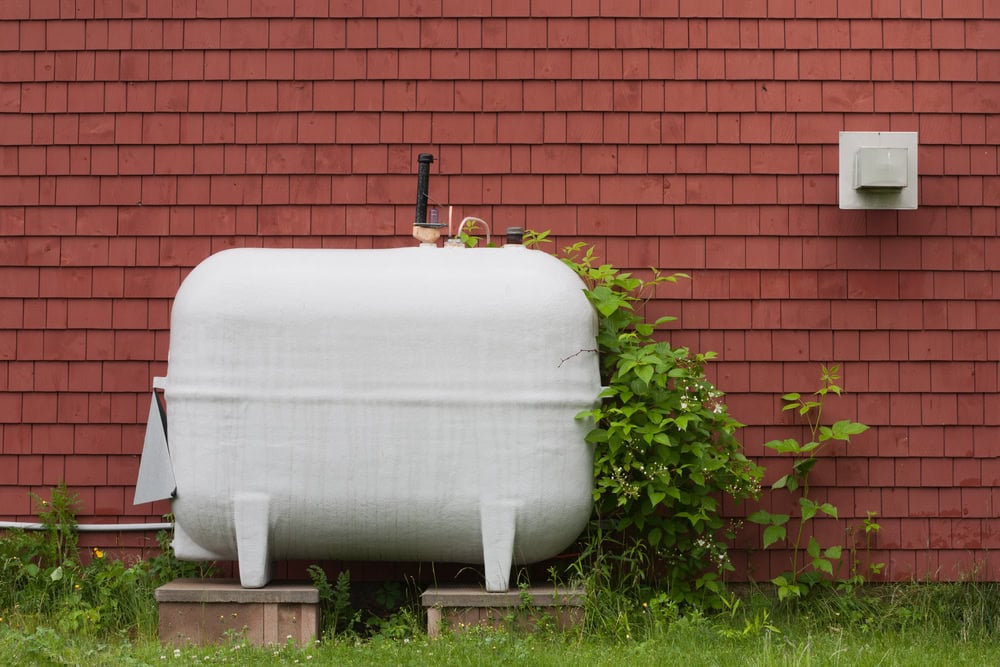
Where you live in Suffolk County matters too. Salt air off the Sound and the Atlantic is hard on oil tanks, fuel lines, and burner parts, especially in places like Sound Beach, Northwest Harbor, and the Hamptons, so we ask our technicians to look over your tank and fuel lines while they’re there. Further west, plenty of postwar houses in Smithtown, Medford, and Holtsville still run burners from the 1970s and 80s. Those older units tend to carry the most soot, and they have the most to learn from a combustion test.
Out on the East End, many neighborhoods have no natural gas line to switch to, which means the burner in your basement is usually the only heat you’ve got. Heating oil sold on Long Island is a B5 biodiesel blend, something our experienced technicians already account for when setting the burner.
How often should you do this? Most oil dealers say every year, and a few sources say every other year for a system in good shape. We lean toward annual, because soot builds up quietly whether or not the burner sounds fine. If you skipped last year, this is the year to fix that.
Want live answers?
Connect with a Suffolk Oil expert for fast, friendly support.
Local shops that post a flat price for a full tune-up land around $219 to $249. Our tune-up special is currently $149.95, regularly priced at $249.95. Confirm the price when you book rather than assuming it never changes.
National guides run wider, from about $150 to $400 depending on region and what’s included. That gap is why the first question for any company is what the number covers. A price that includes the nozzle, filter, strainer, and combustion test isn’t the same as one that covers a nozzle swap and a handshake.

Most of the time, the price you’re quoted is the price you pay. The exceptions are parts that wear beyond the nozzle and filter, like a tired pump or a cracked liner. Those should be quoted before work starts, and you should get to say yes before anything gets installed. Be wary of any visit where the findings arrive after the work is already done. Some companies use tune-ups to hunt for repairs, and a clear quote-first rule is how you keep that from happening to you.
If your tank has ever run dry, burner priming is a separate service, and ours is $65.
It also helps to know what the other side of the ledger looks like. Emergency repairs run $250 to $1,800, and nights, weekends, and holidays typically carry two to three times the standard labor rate. A new oil burner costs $2,000 to $7,000 plus installation. A tune-up won’t prevent every failure, but it will tell you whether your system has life left. With heat pump rebates, gas conversion ads, and PSEG electric rates all in the conversation around Suffolk County, that’s worth knowing in September rather than guessing about in January.
Then there’s the fuel. Long Island heating oil is averaging about $5.22 a gallon in 2026 according to NYSERDA, and a typical Suffolk County home burns 800 to 1,200 gallons a year. As an illustration only: if a neglected burner wasted 5% of 800 gallons, that’s about 40 gallons, or roughly $209. A well-kept system won’t see that, and nobody can promise it, but at these prices a sooty burner costs more than it used to.
No. This is one of the bigger misunderstandings among homeowners who buy oil cash on delivery. A tune-up and a service plan are different things. Plans that bundle parts and labor typically run $200 to $500 a year, and some are tied to automatic delivery, which is exactly what people shopping for the best oil price are trying to avoid. At Consolidated Energy – Suffolk Oil, we treat maintenance and fuel delivery as separate decisions. Get the tune-up without signing anything, and buy oil when you need it.
Timing matters more than most people think. September is the sweet spot, with August through October a workable window. Our technicians are less busy from June through August, so appointments come faster then. Wait for the first cold week and you may hear what some homeowners report: no openings until January.
Whoever you hire, ask for their license number. Suffolk County Consumer Affairs licenses more than 15,000 vendors and publishes a search where you can look a company up and check for complaints. It takes two minutes and it’s worth doing. We’re licensed by New York State and insured, and we’ve been serving Suffolk County for over 50 years, but you shouldn’t take anyone’s word for it, ours included.
A good tune-up has a checklist you can follow, a combustion readout you can hold, and a price that’s settled before the work begins. Parts beyond the basics get quoted first, you don’t need a service plan to get one, and late summer is the easiest time to get on the schedule. Whether you’re in Medford, Patchogue, or out on the North Fork, that’s the standard to hold any company to.
If you’d like to book through Consolidated Energy – Suffolk Oil, call us at 631-924-4030. Tell us whether you have a boiler or a furnace, ask what the visit includes, and ask for the readout. We’d rather answer those questions up front.
Article details:
Share:
Continue learning: