Suffolk County has stricter oil tank rules than most of New York. Here's what homeowners need to know before installing or replacing a tank.
Share:
Summary:
If you’re replacing a heating oil tank in Suffolk County — or installing one for the first time — you’re dealing with a regulatory environment that’s more involved than most of New York State. That’s not just a formality. It’s the reality of living in a county that takes its groundwater seriously, and for good reason.
A lot of homeowners go into this process assuming it’s straightforward, then run into permit requirements they didn’t expect, inspections they weren’t prepared for, or contractors who didn’t pull the right paperwork. This page is here to clear all of that up — so you know exactly what you’re walking into before anything gets installed.
Suffolk County is one of only four counties in New York State — alongside Nassau, Westchester, and Cortland — that administers its own petroleum bulk storage program, separate from the state-level rules set by the DEC. That distinction matters more than most people realize.
Under state law, home heating oil tanks under 1,100 gallons are generally exempt from state registration requirements. But in Suffolk County, that exemption doesn’t apply the same way. We operate under Articles 12 and 18 of the Suffolk County Sanitary Code, administered by the Department of Health Services Division of Environmental Quality — and those rules can be stricter than what the state requires.
The reason comes down to the Long Island aquifer. It’s the sole source of drinking water for more than three million people, and a single leaking underground tank can contaminate it in ways that are costly and difficult to reverse. That environmental reality is why Suffolk County takes tank compliance more seriously than most places, and why homeowners here can’t rely on generic out-of-state guidance.
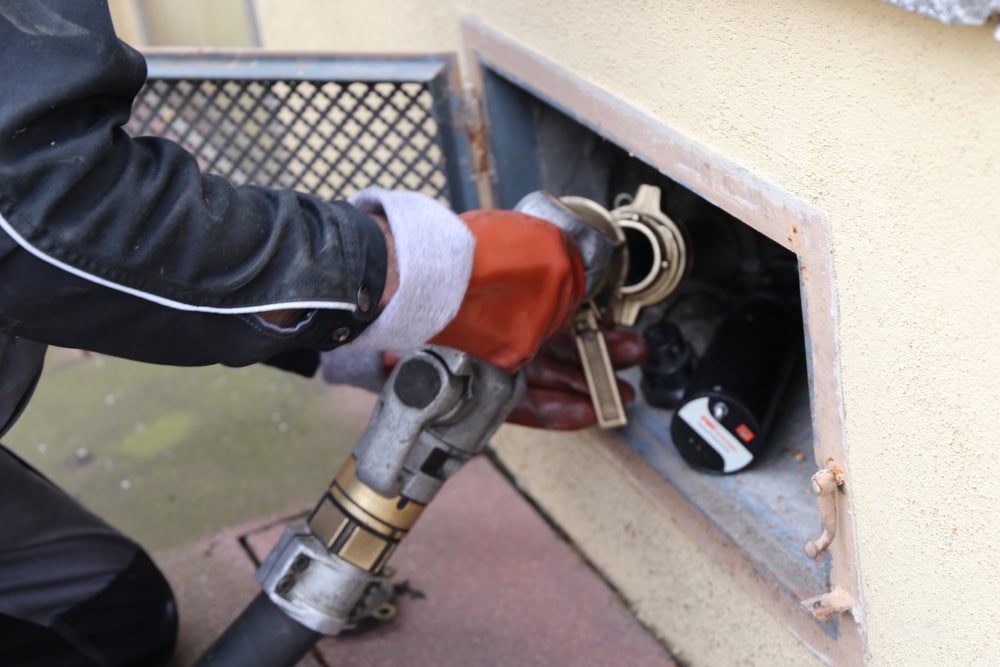
This is where a lot of homeowners get tripped up. In Suffolk County, getting a heating oil tank installed or replaced isn’t a single-permit process — it involves two separate systems running at the same time.
First, you need a permit from your local town building department. Suffolk County has ten towns — Babylon, Brookhaven, East Hampton, Huntington, Islip, Riverhead, Shelter Island, Smithtown, Southampton, and Southold — and each one has its own building department with its own forms, fees, and inspection procedures. In Islip, for example, the permit process requires a physical inspection and an abandonment certificate from the certified company doing the work. The contractor must also carry at least $1,000,000 in liability insurance per occurrence. Brookhaven’s Article XIX requires permits for oil burners connected to tanks over 25 gallons indoors or 60 gallons outdoors. The specifics vary, but the requirement to pull a permit does not.
Second, depending on the size and type of your tank, you may also need to register with the Suffolk County Department of Health Services under its Toxic and Hazardous Materials Storage program. This is where the county-level oversight comes in on top of your town’s requirements.
For most residential installations, a licensed contractor who knows the local landscape will handle both sides of this process on your behalf. That’s not a luxury — it’s genuinely the most efficient way to get through it without delays. A contractor who’s unfamiliar with Suffolk County’s specific requirements can cost you weeks in back-and-forth with the wrong agency or incomplete paperwork.
One more thing worth knowing: Suffolk County currently offers a $100 rebate for eligible homeowners who properly close a residential fuel oil storage tank of 1,100 gallons or less. Most homeowners never hear about this, but it’s a real incentive that a knowledgeable local contractor should be flagging for you.
The type of tank you have — or plan to install — changes the regulatory picture significantly, and it also changes the financial picture if something goes wrong.
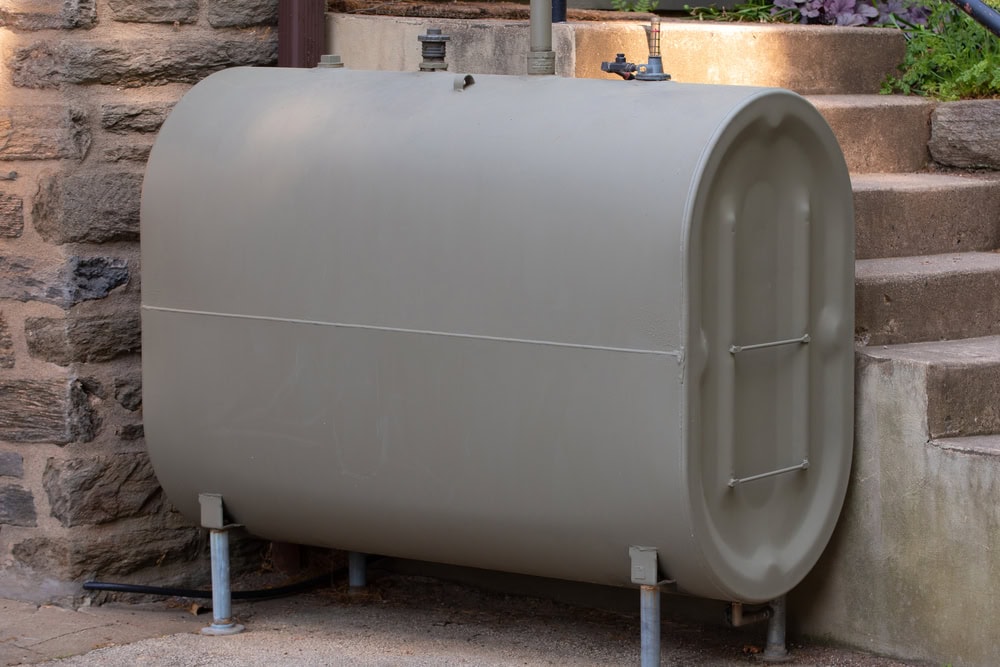
Above-ground tanks are far more common for residential use in Suffolk County, and the standard size is 275 gallons for smaller homes or 330 gallons for larger ones. For outdoor above-ground installations, the tank must sit on a 4-inch thick reinforced concrete pad — not on grass, not on dirt, not on a wood platform. That pad needs to cure for 72 hours before the tank is set. It sounds like a small detail, but it’s one of the first things an inspector checks, and it’s one of the most commonly skipped steps when unlicensed contractors cut corners.
Underground tanks are a different story entirely. They were never really designed to be buried long-term, and the ones installed during the 1960s, ’70s, and ’80s — when a huge portion of Suffolk County’s housing stock was built — are at serious risk of corrosion and undetected leakage. The cleanup cost for a leaking underground tank can exceed $20,000, and here’s the part most homeowners don’t know: most standard homeowner’s insurance policies include a pollution exclusion clause that specifically carves out petroleum contamination. That means if your underground tank leaks, you may be personally responsible for every dollar of remediation.
Replacing an underground tank in New York runs anywhere from $12,500 to $19,500 or more, compared to $2,700 to $4,600 for a typical above-ground installation on Long Island. The math on proactive replacement is hard to argue with, especially given the liability exposure of leaving an aging underground tank in place.
All new tanks — above-ground or underground — must meet applicable UL standards. Indoor and basement tanks fall under UL 80. Underground tanks are governed by UL 58. The installation itself must comply with NFPA 31, the national standard for oil-burning equipment, along with New York State Mechanical Code Chapter 13.
Want live answers?
Connect with a Suffolk Oil expert for fast, friendly support.
Installation is only part of the picture. Once a tank is in place, there are ongoing inspection and maintenance obligations that homeowners in Suffolk County need to understand — both to stay compliant and to catch problems before they become expensive ones.
A properly installed tank should be inspected periodically for signs of corrosion, leakage, or structural wear. For outdoor above-ground tanks, Long Island’s coastal marine climate accelerates external corrosion faster than you’d see in a drier inland environment. The freeze-thaw cycles that come with every Long Island winter put additional stress on aging metal. A tank that looks fine from the outside can be deteriorating from the inside, which is why visual checks alone aren’t enough.
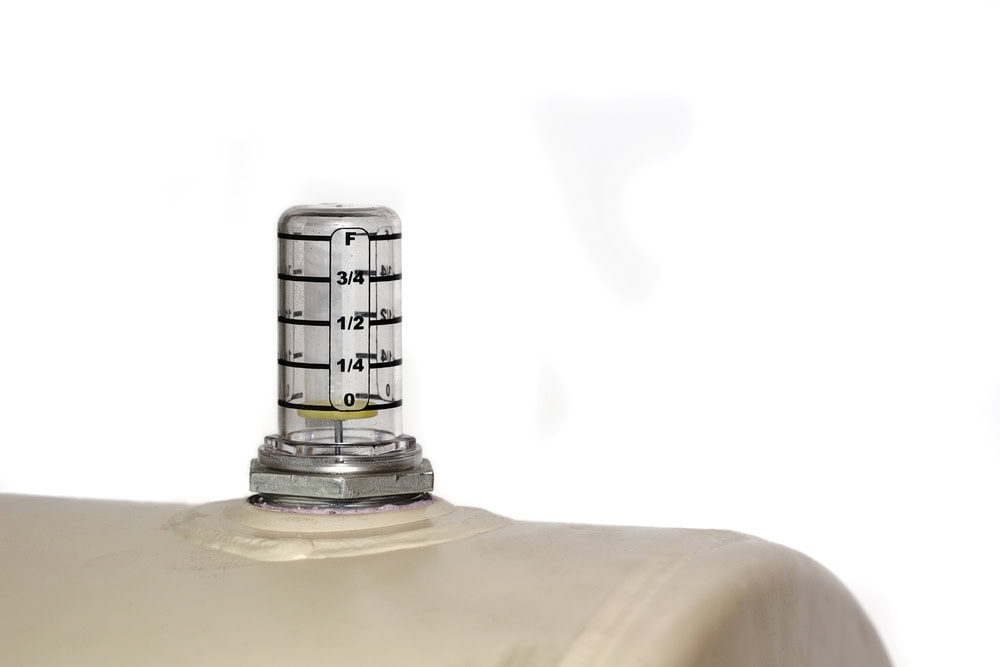
There are a few indicators that should prompt a professional inspection sooner rather than later. If your heating oil consumption has gone up without a clear explanation — colder weather, more people in the house, a less efficient burner — that’s worth investigating. An unexplained drop in usage can also be a sign of a problem, particularly with underground tanks where water infiltration can mask a slow leak by keeping the gauge reading higher than the actual oil level.
Visible rust or staining on the tank exterior, wet spots around the base, or a fuel smell in the basement or near the tank are all reasons to call a professional immediately. These aren’t “keep an eye on it” situations. In Suffolk County, where groundwater contamination has real consequences for the entire county’s water supply, a slow leak that goes unaddressed can turn into a legal and financial problem fast.
For older homes — and Suffolk County has a lot of them, particularly in communities like Brentwood, Bay Shore, Huntington Station, and Coram where post-war construction is common — it’s worth knowing how old your tank actually is. If it was installed before 1990 and hasn’t been replaced, it’s likely past its recommended service life. Steel tanks don’t last forever, and the ones from that era weren’t built to the same standards as what’s available today.
A professional inspection before each heating season is a reasonable baseline. If your tank is more than 20 years old, or if you’ve recently purchased a home and don’t have documentation on the tank’s age or installation history, an inspection should happen before the first delivery of the season — not after.
Tank compliance doesn’t stop at installation. The fuel going into your tank has to meet current New York State standards too, and that’s a detail worth understanding before you choose a delivery provider.
New York State requires that all heating oil delivered in Suffolk County meet the B5 standard — a blend containing at least 5% biodiesel. This isn’t optional, and it’s not a specialty product. It’s the baseline for every legal residential delivery in the county. Your tank materials need to be compatible with this blend, which is another reason why older tanks — particularly those with certain types of seals or gaskets — may need to be evaluated before you start taking deliveries.
We’ve been delivering B5-compliant premium heating oil to Suffolk County homes for over 50 years. That means we were operating here before many of the current regulations were written, and we’ve watched the compliance landscape evolve in real time. We know what the county requires, what individual town building departments expect, and what a properly installed, properly fueled system looks like.
When you order through us, you’re getting fuel that meets every current state and county requirement, delivered by a company that knows this market the way a neighbor knows their street. No contracts, no hidden fees, same price whether you pay cash or credit, and online ordering available around the clock without needing to create an account. Once your tank is installed and compliant, keeping it full should be the easy part — and we make sure it is.
Don’t assume the rules that apply elsewhere in New York apply here. Suffolk County has its own regulatory program, its own permit process, and its own inspection requirements — and the consequences of skipping steps range from failed inspections to personal liability for environmental cleanup costs that your insurance likely won’t cover.
Start with a licensed, insured contractor who has real experience working with Suffolk County’s town building departments and the Department of Health Services. Make sure permits are pulled before work begins, the foundation is built to spec, and the installation is tested and documented before the system goes live.
If you have questions about how tank compliance connects to your heating oil delivery, or you’re ready to set up service once your installation is complete, we’ve been the answer for Suffolk County homeowners for more than five decades. Reach out and we’ll take it from there.
Article details:
Share:
Continue learning: