Not all heating fuel is created equal. Here's what Suffolk County homeowners actually need to know about costs, efficiency, and when to replace aging equipment.
Share:
Summary:
Most homeowners think about heating fuel in terms of price per gallon. That number matters, but it’s only part of the picture. The real cost includes what your system burns, how efficiently it burns it, how old your equipment is, and whether the fuel you’re using is even the right fit for your home and your part of Suffolk County.
If you’re in Brentwood, Bay Shore, Medford, or anywhere east toward the Hamptons, you already know that heating season here is no joke — temperatures regularly dip into the low 20s, and a reliable fuel supply isn’t optional. Here’s what you need to know to make a smarter decision.
The four main residential heating fuel types each have a different cost profile, and the cheapest option on paper isn’t always the cheapest in practice. Natural gas runs the lowest annual operating cost — roughly $2,081 per year for a 90% efficient furnace — but large portions of Suffolk County, particularly in eastern towns like Riverhead, Southampton, and Shelter Island, don’t have access to gas pipelines at all. For those homeowners, the conversation starts and ends with oil, propane, or electric.
Propane looks affordable at around $2.50 per gallon, but it only delivers about 91,400 BTUs per gallon. Heating oil costs more per gallon — around $3.87 on average — but delivers roughly 137,381 BTUs per gallon. That gap in heat output means oil stretches further than the sticker price suggests. Electric resistance heat is the most expensive option across the board, and with PSEG Long Island’s rates among the highest in the country, that gap is even wider here than the national averages imply.
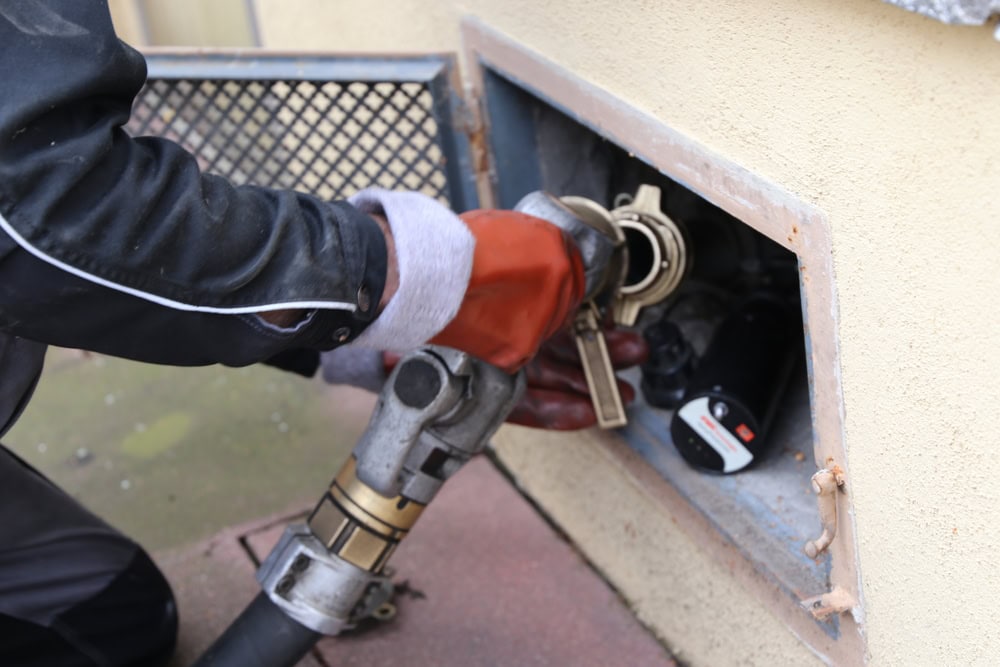
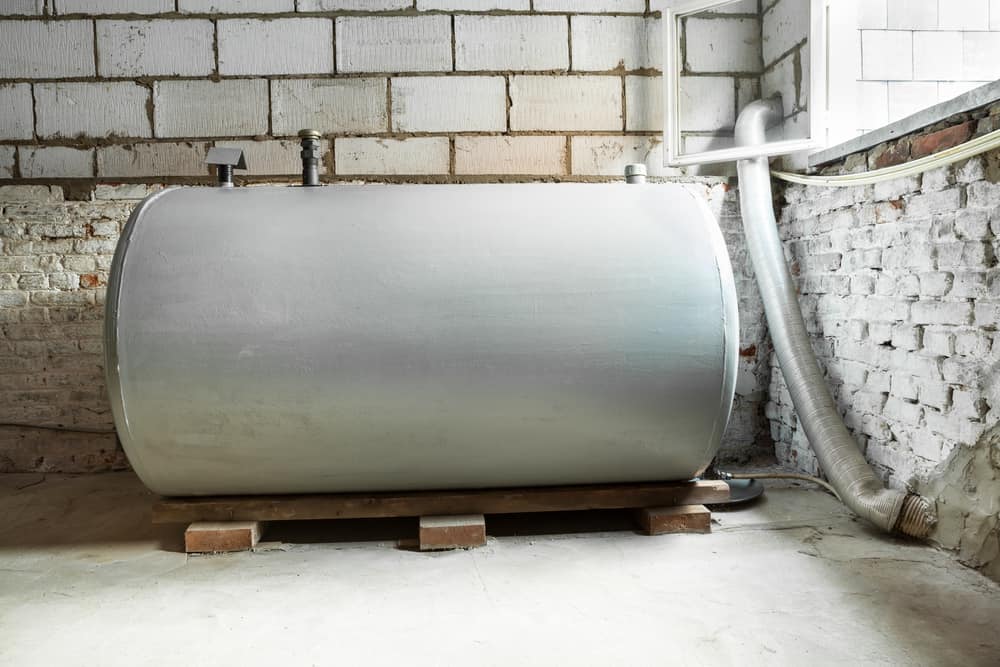
Based on EIA winter fuels data, a typical heating oil customer in Suffolk County spends around $1,410 for the November through March heating season. Propane comes in at roughly $1,189, electricity at $1,054 for resistance heat, and natural gas at approximately $602. Heat pumps can come in around $479 under ideal conditions, but that figure assumes moderate winter temperatures and doesn’t account for performance limitations when temperatures drop below 20°F — which happens regularly across Suffolk County — or the high cost of electricity on Long Island.
What those numbers don’t capture is the conversion cost. If you’re currently on oil and considering a switch to gas or a heat pump, you’re looking at a new furnace, potential ductwork modifications, possible gas line installation, and permits. That can easily run $5,000 to $15,000 or more depending on your home’s setup. For many homeowners in eastern Suffolk County, gas conversion isn’t even an option — the infrastructure simply isn’t there.
The more practical question for most Suffolk County homeowners isn’t which fuel is cheapest in theory. It’s which fuel is actually available, what your current equipment supports, and whether the cost of switching makes financial sense given your timeline in the home. A 10-year payback period on a fuel switch only works if you’re planning to stay that long — and if the conversion is even possible where you live.
One more thing worth knowing: every gallon of heating oil delivered in Downstate New York, including all of Suffolk County, must meet the state’s B5 biodiesel standard — a 5% biodiesel blend required by the NYS DEC. It burns cleaner than older fuel oil formulations and works with all modern heating systems without any modifications. It’s not an upgrade you pay extra for; it’s the baseline standard. But not every company communicates that clearly, and it’s worth knowing your fuel is compliant.
When you’re evaluating heating fuel costs over time, the per-gallon price is the starting point — not the finish line. Equipment efficiency, maintenance costs, and the age of your system all affect what you’re actually spending each year. A 20-year-old oil furnace running at 70% efficiency is burning significantly more fuel than a modern unit rated at 84% to 90% AFUE. At 800 gallons per year, that efficiency gap can translate to 80 to 120 gallons of wasted fuel annually — somewhere between $310 and $464 at current prices, every single year.
Annual maintenance is another line item that often gets overlooked until something breaks. A professional furnace tune-up typically runs $70 to $200 for a single service visit, or $150 to $500 for a full annual maintenance package. Skipping it saves money in the short term and costs more in the long run — both in fuel efficiency and in the risk of a mid-January breakdown when every HVAC technician on Long Island is slammed.
The honest version of a total cost comparison also includes what you’d spend to switch fuels. Ductwork modifications alone can run $1,400 to $5,600 or more. A new gas furnace installed runs $3,800 to $12,000. If you’re on oil and your system is running well, the math often favors staying put and optimizing — better maintenance, a more efficient burner, and a reliable delivery partner — rather than a costly conversion that may take a decade to pay back.
Want live answers?
Connect with a Suffolk Oil expert for fast, friendly support.
Furnace age is the most common trigger for replacement conversations, but age alone doesn’t tell the whole story. ENERGY STAR recommends considering replacement once a furnace crosses the 15-year mark, and most oil furnaces have a realistic lifespan of 15 to 20 years. But a well-maintained 18-year-old furnace that’s heating evenly and running efficiently is a different situation from a 12-year-old unit that’s been patched together with three repairs in two years.
The smarter framework is the 50% rule: if the cost of a repair exceeds 50% of what a replacement would cost, it’s usually time to replace. That threshold keeps you from throwing good money after bad on a system that’s already on borrowed time.
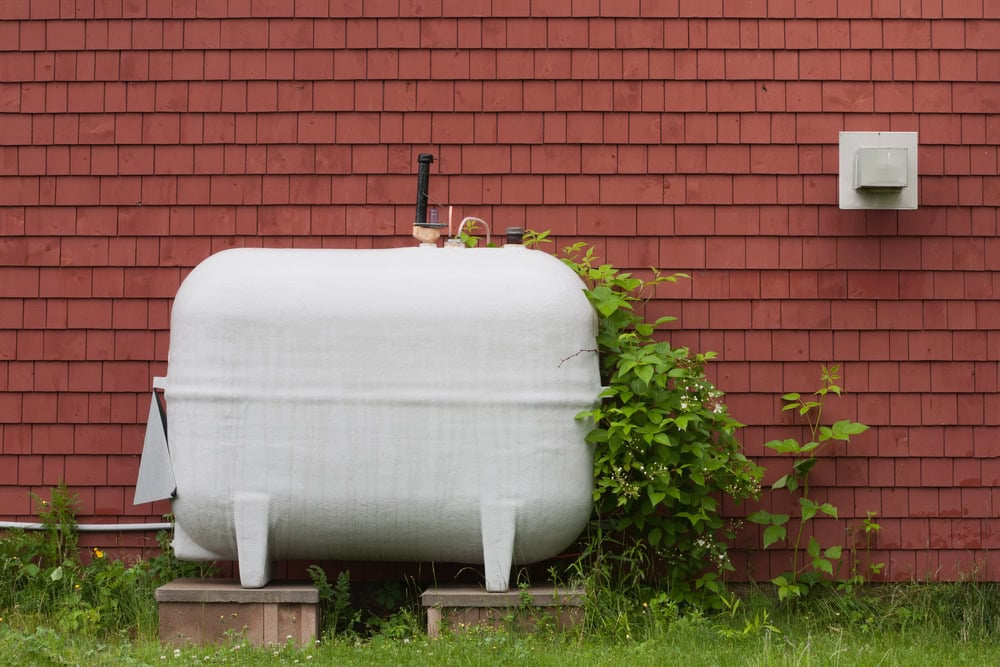
Oil furnace replacement is rarely a sudden decision — the warning signs tend to build up over time. Rising heating bills without a corresponding increase in fuel prices are one of the clearest signals. If you’re burning noticeably more oil than you did a few years ago and nothing else has changed, your system’s efficiency is likely declining. Uneven heat distribution — some rooms comfortable, others cold — is another indicator that the system is struggling to perform.
More obvious signs include strange noises like banging, rattling, or persistent cycling on and off, yellow or flickering burner flames instead of a clean blue flame, and visible soot or rust around the unit. Frequent repair calls are a strong signal on their own. If you’ve had a technician out two or three times in a single heating season, the cumulative repair cost is likely approaching that 50% threshold.
Oil furnace replacement costs range from $2,500 to $10,000, with most homeowners in the $5,000 to $6,000 range including installation. Labor alone typically runs $1,000 to $3,000 depending on the complexity of the job. High-efficiency oil furnaces — those rated at 84% AFUE or better — are now the federal minimum for new installations, and upgrading from an older 70% efficient unit can meaningfully reduce your annual fuel consumption from day one.
If your furnace is approaching or past 15 years old and you’re seeing any combination of these signs, getting a professional assessment before the heating season starts is worth it. A tune-up can confirm whether the system has more life left or whether you’re better off planning a replacement on your timeline rather than being forced into one on a cold night in February.
Gas furnace replacement follows a similar decision framework, with a few important differences. Gas furnaces tend to run at higher efficiency ratings than oil — high-efficiency condensing models achieve 90% to 98% AFUE — and the annual operating cost is lower where natural gas is available. But the replacement cost isn’t dramatically different. A new gas furnace installed runs $3,800 to $12,000, with 2025 averages landing in the $4,800 to $6,200 range for a standard swap.
The warning signs for gas furnace failure overlap significantly with oil: rising energy bills, uneven heating, frequent cycling, and unusual noises. A few signs are specific to gas systems, though. A yellow or orange pilot flame instead of a clean blue one can indicate incomplete combustion and a potential carbon monoxide risk. A persistent sulfur or rotten egg smell near the unit should be treated as an emergency — that’s the smell of a gas leak, and it warrants an immediate call to the gas company and evacuation of the home.
For Suffolk County homeowners on gas, the replacement decision also involves thinking about what comes next. Heat pump technology has improved significantly, and cold-climate models now perform reasonably well in temperatures down to around 5°F. But Long Island’s electricity rates are among the highest in the nation, which changes the cost math compared to what you’d see in national comparisons. A heat pump that pencils out in a warmer state with average electricity rates may not deliver the same savings here. Getting a load calculation done by a licensed contractor — not just a sales pitch — is the only way to know for sure.
One thing that applies regardless of fuel type: don’t wait until the system fails to start planning. Replacement on your schedule, in the fall before the heating season, gives you time to compare options, get multiple quotes, and make a decision based on value rather than desperation.
The true cost of your heating fuel is the sum of what you pay per gallon, how efficiently your system uses it, what it costs to maintain, and whether your equipment is still doing its job. For most Suffolk County homeowners, heating oil remains the most practical and cost-competitive option — especially in the many parts of the county where natural gas simply isn’t available.
What matters most is having a reliable supply, a well-maintained system, and a delivery partner who’s been doing this long enough to know the difference between a slow week and a genuine emergency.
We at Consolidated Energy – Suffolk Oil have been keeping homes warm across Nassau and Suffolk Counties for over 50 years. If you’re ready to order, have questions about your system, or want to take advantage of our $149.95 tune-up special before the season starts, we’re available 24 hours a day — online, by phone, or through our mobile app. No contracts, no hidden fees, and the same price whether you pay cash or card.
Article details:
Share:
Continue learning: