Heating oil or natural gas? For Suffolk County homeowners, the answer isn't as simple as comparing price tags. Here's what the numbers actually show.
Share:

Summary:
Most heating comparisons you’ll find online were written for a national audience. They’ll tell you gas is cheaper per unit, oil is more energy-dense, and heat pumps are the future. All technically true — and almost entirely useless without local context.
Suffolk County is its own story. The housing stock, the gas infrastructure gaps, the electricity rates, the winters — none of it lines up with what works in Ohio or Georgia. If you’re trying to decide whether to stay with oil, convert to gas, or explore a heat pump, the honest answer starts with understanding what those options actually cost and perform like here on Long Island.
The first thing most people do is compare price per unit — a gallon of oil versus a therm of gas. The problem is those aren’t the same unit. One gallon of heating oil contains roughly 138,500 BTUs of heat energy. One therm of natural gas contains about 100,000 BTUs. That’s a 38.5% difference in output, which means the price-per-unit comparison is misleading from the start.
When you do the math on a per-BTU basis, the gap between oil and gas narrows considerably. That doesn’t mean oil is always the cheaper option — it depends on current prices, your system’s efficiency, and how much you use. But it does mean that anyone telling you gas is automatically cheaper without running the actual numbers isn’t giving you the full picture.
This is where the conversation gets real. A full oil-to-gas conversion in Suffolk County typically runs between $9,000 and $18,000 — and that’s the range contractors quote before you start asking follow-up questions. The number that actually matters is the all-in cost, and it’s almost always higher.
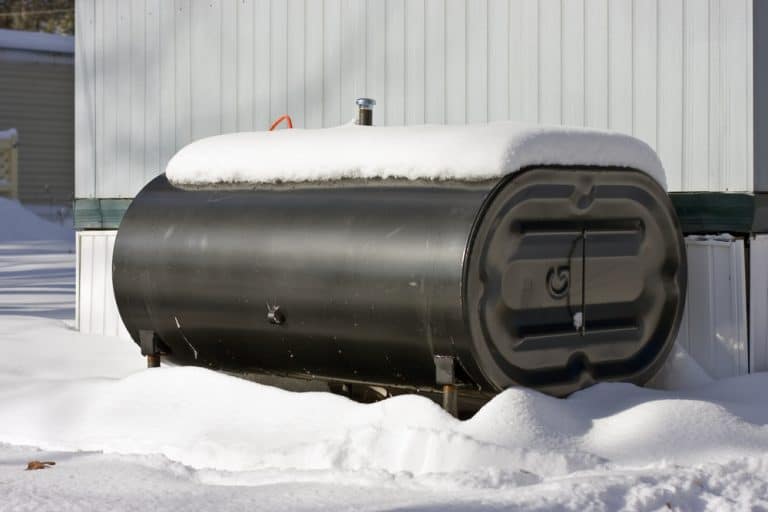
Here’s what tends to get left out of the initial estimate: if your home has an older masonry chimney — and most pre-1980 Suffolk County homes do — it was sized for oil exhaust, not gas. Switching fuels means relining that chimney with stainless steel, which adds $1,500 to $3,000 on its own. Then there’s the existing oil tank. Above-ground tanks typically cost $500 to $1,500 to decommission or remove. Underground tanks can cost more, and may require environmental testing depending on age and condition. Permitting fees on top of that aren’t unusual either.
A realistic all-in conversion budget for most Suffolk County homes lands somewhere between $12,000 and $22,000. National Grid does offer rebates up to $1,100 for qualifying high-efficiency gas installations, which helps at the margin — but it doesn’t fundamentally change the math.
The payback period on that investment is typically three to seven years, assuming fuel price differences hold and you stay in the home long enough to recoup it. That’s a reasonable bet for some homeowners. For others — especially those in eastern Suffolk where National Grid coverage gets thin, or anyone planning to sell within five years — it’s a harder case to make.
One more thing worth knowing: gas is not available at every address in Suffolk County. Coverage is solid in western and central communities like Babylon, Islip, and Smithtown — but large parts of the East End, including Southold, Southampton, East Hampton, and Shelter Island, have limited or no service at the street. Before anyone starts getting conversion quotes, the first step is checking availability at nationalgridus.com. If gas isn’t at your street, the conversion question answers itself.
Monthly fuel costs get most of the attention, but they’re only part of the picture. Equipment lifespan changes the math in ways that don’t show up in a simple annual comparison.
Oil heating systems, when properly maintained, routinely last 30 years or more. Natural gas furnaces average 11 to 14 years. Over a 30-year period, you’re likely replacing a gas furnace two or three times while a well-maintained oil system keeps running. Each replacement runs several thousand dollars, and that cost rarely gets factored into the “gas saves you money” narrative.
There’s also the competitive pricing dynamic that’s unique to oil. Suffolk County homeowners with oil heat can shop among multiple local suppliers and compare prices in real time — services like HeatFleet let you see per-gallon prices by zip code on any given day. Natural gas customers don’t have that option. National Grid is the only game in town, with regulated rates you have no ability to shop around. In a volatile energy market, having the ability to compare prices and switch suppliers has real dollar value that’s hard to quantify but very real.
And then there’s the environmental picture, which has shifted more than most people realize. New York State now requires a minimum 5% biodiesel blend — B5 — in all heating oil sold in Downstate New York, including Suffolk County. That mandate is already in effect and is legislated to increase over time. Every gallon of heating oil delivered in Suffolk County today burns cleaner than it did five years ago, and the trajectory continues in that direction without requiring you to change your equipment. Meanwhile, New York has actually banned natural gas in new construction — a policy signal that the state’s long-term energy path runs toward electrification, not gas expansion.
Want live answers?
Connect with a Suffolk Oil expert for fast, friendly support.
Heat pumps have gotten a lot of attention lately, and for good reason — the technology has genuinely improved, and the rebate programs in New York are substantial. But the conversation on Long Island comes with some important caveats that don’t always make it into the ads.
The first thing to know is that not all heat pumps are built for this climate. Standard models struggle in serious cold. What Suffolk County homes need are cold-climate heat pumps — units rated to operate efficiently down to -15°F or below. Long Island’s record low is around -14°F, so the margin isn’t enormous. The right equipment exists and works well here; the wrong equipment does not.
A whole-home cold-climate heat pump installation in Suffolk County typically runs $12,000 to $20,000 before incentives. That’s a significant upfront cost, but the rebate stack available to New York homeowners is genuinely meaningful.
NYSERDA’s Clean Heat program offers rebates up to $12,000 for qualifying heat pump installations. Income-eligible households can access additional support through the EmPower+ program — up to $24,000 in some cases. On top of that, the federal tax credit covers 30% of installation costs, up to $2,000, and it runs through 2032. When you layer those together, the net cost for a well-qualified homeowner can drop substantially.
The payback period for replacing oil heat with a heat pump in this market is typically four to eight years, and the U.S. Department of Energy estimates potential annual savings of $923 to $2,822 compared to oil, depending on usage and home characteristics. Those numbers are real — but they’re also sensitive to one factor that’s particularly relevant here: electricity rates. PSEG Long Island customers pay approximately $0.25 to $0.31 per kilowatt-hour, which is among the highest in the country. That rate directly affects heat pump operating costs and extends payback timelines compared to what you’d see in states with cheaper electricity.
For a homeowner whose oil system is failing and needs replacement anyway, a heat pump is worth a serious look — especially if the home is well-insulated and the full rebate stack is accessible. For a homeowner with a working oil system, upgrading to a high-efficiency burner almost always delivers better near-term ROI. Our equipment upgrade data shows an average 17% efficiency improvement from modern oil system upgrades, saving roughly 144 gallons per year at typical usage rates. At $3.50 per gallon, that’s around $500 in annual savings from a single upgrade — and the equipment you already own keeps running.
Efficiency ratings are worth understanding, but they need context to be useful. For oil and gas systems, the relevant number is AFUE — Annual Fuel Utilization Efficiency. It tells you what percentage of the fuel’s energy actually becomes heat in your home. Modern oil systems run between 83% and 95% AFUE. Modern gas systems top out around 95% AFUE. Older oil systems from the 1970s operated at 55% to 65% AFUE, which is why upgrading an aging system makes such a meaningful difference.
Heat pumps are measured differently — their efficiency is expressed as COP, or Coefficient of Performance. A COP of 3.0 means the system delivers three units of heat for every one unit of electricity it consumes, which translates to roughly 300% efficiency. Cold-climate heat pumps in real-world conditions typically achieve COPs between 2.0 and 4.0 depending on outdoor temperature. At Long Island’s coldest temperatures, output drops — but modern cold-climate units maintain meaningful efficiency well below freezing.
The mistake most people make when comparing these numbers is treating efficiency as the only variable. It isn’t. A 95% AFUE gas furnace that costs $15,000 to install and lasts 12 years is not automatically more economical than a well-maintained 85% AFUE oil boiler that runs for 30 years. Total cost of ownership — fuel cost per BTU, system lifespan, maintenance, and replacement frequency — is what actually determines which system saves you more money over time. There’s no universal answer. The right system depends on your home’s age, insulation, current equipment condition, whether gas is available at your address, and how long you plan to stay.
What we’d say to most Suffolk County homeowners is this: if your oil system is running well and was installed or upgraded in the last 15 to 20 years, the case for staying with oil and optimizing what you have is strong. If you’re facing a system replacement, that’s the moment to run the numbers seriously on all three options.
There’s no single answer that works for every home on Long Island — but there are a few things that are consistently true. The per-unit price comparison between oil and gas is misleading without accounting for BTU output. Gas conversion costs in Suffolk County are higher than most quotes suggest once you factor in chimney liners, tank removal, and permits. Heat pumps are a legitimate option for the right home and the right situation, but Suffolk County’s electricity rates affect the math in ways that national comparisons don’t capture. And oil heating systems, maintained properly, outlast gas furnaces by a significant margin.
If you’re heating with oil in Suffolk County, you’re not behind the curve — you’re heating with a fuel that’s cleaner than it’s ever been, backed by a competitive local market that keeps prices honest, and using equipment built to last. The question worth asking isn’t always “should I switch?” It’s often “am I getting the most out of what I have?”
We’ve been delivering heating oil across Nassau and Suffolk Counties for over 50 years. If you have questions about your system, want to schedule a tune-up, or just need oil delivered without the runaround, we’re here — 24 hours a day, no login required.
—
**Frequently Asked Questions**
**Which heating system is most cost-effective for Suffolk County homeowners?**
It depends on your specific situation, but for most homeowners with a working oil system, staying with oil and upgrading to a high-efficiency burner tends to offer the best near-term return. Gas conversion costs in Suffolk County — often $12,000 to $22,000 all-in — take three to seven years to recoup, and that assumes you stay in the home and fuel price differences hold. Heat pumps make the most financial sense when replacing a failing system and when the full NYSERDA rebate stack is accessible. Suffolk County’s high electricity rates from PSEG Long Island do affect heat pump operating costs compared to other markets, so that factor deserves a place in any honest calculation.
**Is natural gas available everywhere in Suffolk County, NY?**
No — and this is one of the most important local details that generic comparisons miss. National Grid’s coverage is reasonably solid in western and central Suffolk communities like Babylon, Islip, and Smithtown. But large parts of eastern Suffolk — Southold, Southampton, East Hampton, Shelter Island — have limited or no gas service at the street. If you’re in one of those areas, conversion may not even be an option without paying to extend the main line, which can cost thousands on its own. The quickest way to check is the address lookup tool at nationalgridus.com. That answer should come before any conversion quote.
**How much does it cost to convert from oil to gas on Long Island?**
Most Long Island contractors quote $9,000 to $18,000 for a full oil-to-gas conversion. But that number frequently excludes chimney liner replacement ($1,500 to $3,000), oil tank decommissioning ($500 to $1,500), and permitting fees. A realistic all-in budget for most Suffolk County homes is $12,000 to $22,000. National Grid offers rebates up to $1,100 for qualifying high-efficiency installations, which helps — but it’s a small offset against the total project cost.
**Do heat pumps work in Long Island winters?**
Modern cold-climate heat pumps are rated to operate efficiently down to -15°F or below. Long Island’s record low is approximately -14°F, so properly specified cold-climate units are built for this market. Standard heat pumps — the kind not designed for extreme cold — are not adequate for Long Island winters. The technology works; the key is making sure the right equipment is selected for the climate zone.
**What is B5 heating oil and why does it matter in New York?**
B5 is a heating oil blend containing 5% biodiesel, and it’s required by New York State law for all heating oil sold in Downstate New York, including Suffolk County. It burns cleaner than traditional heating oil, produces fewer emissions, and works in all existing oil heating systems without modification. New York’s mandate is set to increase the biodiesel content over time, which means oil heating in this state will continue to get cleaner — without requiring homeowners to replace their equipment.
Article details:
Share:
Continue learning: