Before the first cold night of the season, here's what Suffolk County oil heat homeowners should actually be doing — and why waiting until winter costs more.
Share:
Summary:
Suffolk County winters don’t ease you in. One week it’s mild, the next a nor’easter is rolling through and temperatures are dropping into the low twenties. If your heating system hasn’t been touched since last spring, that’s not a great position to be in. The good news is that most of what makes a heating system fail in winter is entirely preventable — and most of it can be handled in fall, before the rush, before the cold snap, and before every technician on Long Island is already booked out two weeks. Here’s what you actually need to know.
The case for fall maintenance isn’t complicated. An oil furnace or boiler that hasn’t been serviced accumulates soot, wears down its nozzle, and quietly loses efficiency — sometimes 10 to 15 percent — without giving you any obvious sign that something’s wrong. You just burn more oil than you should and wonder why the bills keep climbing.
Getting ahead of that in September or October costs far less than dealing with it in January. Technicians are available, pricing is normal, and you have time to address anything that comes up before you actually need the heat running full tilt.
There’s a reasonable amount of fall prep that doesn’t require a licensed technician — and doing it yourself is worth the hour it takes.
Start with the air filter. It’s the single most neglected part of a forced-air oil heating system, and a clogged filter forces the system to work harder, drives up fuel consumption, and shortens equipment life. Check it monthly during the heating season and replace it every one to three months depending on how dirty it gets. It’s a five-minute job that can save you up to 15 percent on heating costs, according to industry estimates.
Next, test your thermostat before you need it. Switch it to heat mode, set it a couple of degrees above the current room temperature, and listen for the system to kick on within about a minute. If it doesn’t respond, start with the batteries — that’s the cause more often than people expect. While you’re at it, clear any furniture, rugs, or curtains away from baseboard radiators and floor vents. Blocked heat distribution is a quiet efficiency killer that’s easy to overlook.
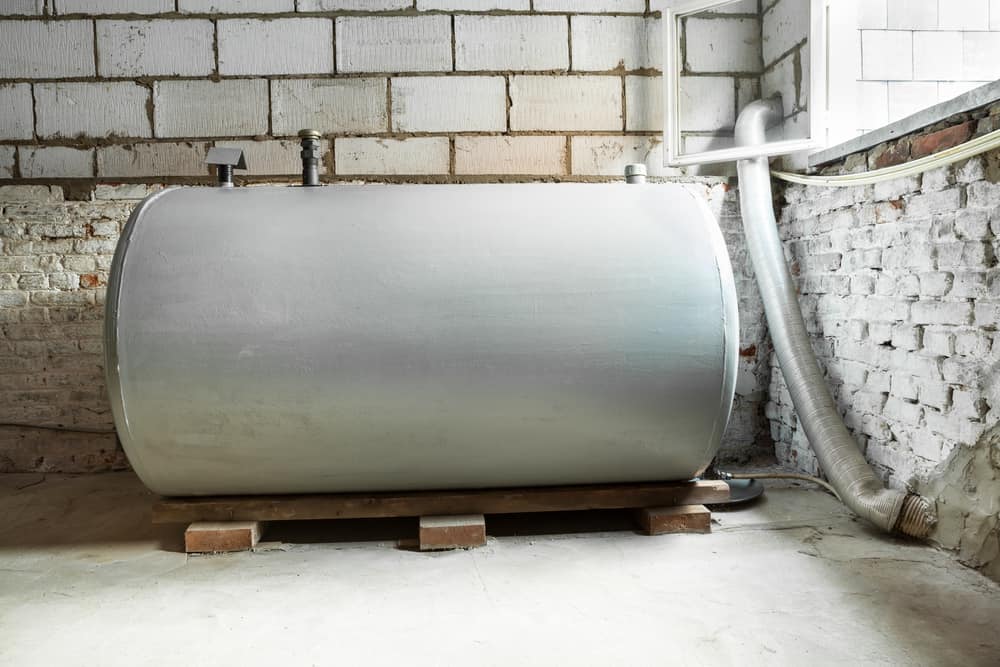
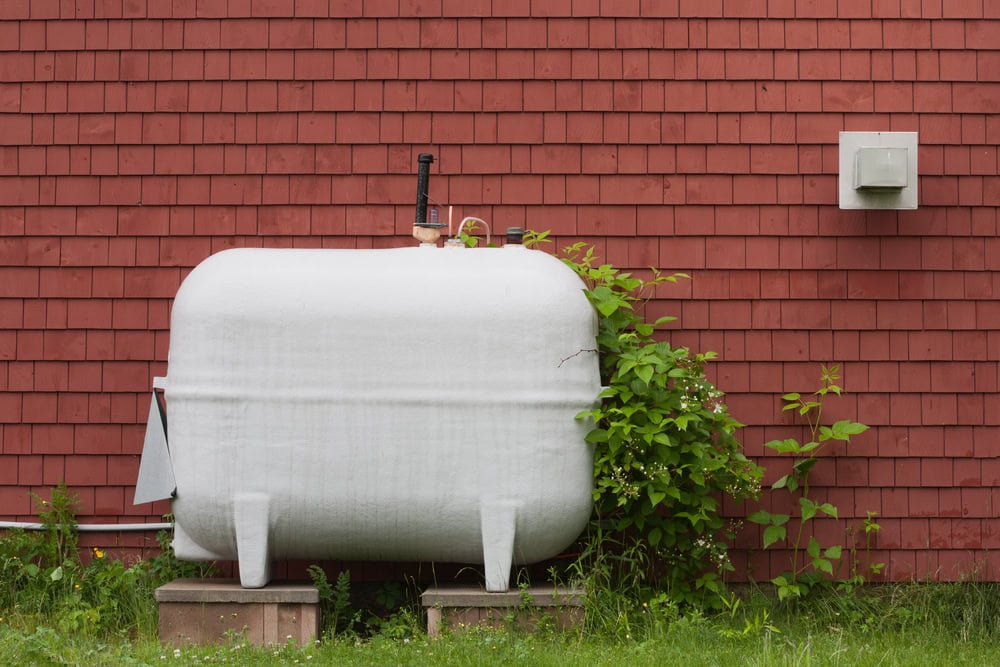
Take a walk around your oil tank, too. Look for any staining on the floor underneath it, any visible rust along the seams, and make sure the fill and vent pipes outside are clear and accessible. You don’t need to open anything or test anything — a simple visual check catches most early warning signs. If your tank is 20 or 30 years old and showing surface rust, that’s worth flagging for a professional.
Finally, check your smoke and carbon monoxide detectors. Replace batteries, test the units, and make sure you have a working CO detector on every level of the home. Oil combustion systems can produce carbon monoxide if something is burning improperly or a flue is blocked — it’s a genuine safety issue, not just a box to check.
A professional tune-up goes well beyond what any homeowner can safely do on their own, and it’s the part of fall heating maintenance that makes the biggest difference in how your system performs all winter.
A licensed technician will replace the oil nozzle, which controls the spray pattern of fuel into the combustion chamber. Nozzles wear out over a heating season and a worn nozzle burns fuel inefficiently, producing more soot and less heat. We’ll also replace the oil filter — separate from the air filter — and clean the pump strainer. The heat exchanger gets brushed and vacuumed to remove soot buildup that insulates the metal and blocks heat transfer. The flue and smokestack get inspected and cleaned. Combustion efficiency gets tested with an analyzer, and the result tells you exactly how well your system is burning — the industry minimum for a properly functioning oil burner is 75 percent efficiency, and anything below that is costing you money every day it runs.
On a boiler system, we’ll also check the low water cut-off, inspect the barometric draft control, and verify the pressure relief valve is functioning correctly. All electrical connections get tightened and tested. The primary safety control circuit gets checked. It’s a thorough process, and it’s the reason homeowners who get annual tune-ups experience roughly 80 percent fewer no-heat service calls during winter.
In Suffolk County specifically, there’s an added reason to take the annual inspection seriously. Salt air from the Atlantic and Long Island Sound accelerates corrosion on oil tanks, fuel lines, and burner components — particularly in coastal communities like Sound Beach, Northwest Harbor, and the Hamptons. What looks fine from the outside can be corroding from within. A technician who knows what to look for in this climate catches things that wouldn’t show up anywhere else.
Right now, we’re offering a tune-up special at $149.95 — regularly $249.95. That’s a real $100 savings, and it’s the kind of thing that pays for itself in fuel savings alone over the course of a winter, before you even factor in what it costs to have a technician come out on an emergency call in January.
Want live answers?
Connect with a Suffolk Oil expert for fast, friendly support.
Servicing your system is half the equation. The other half is making sure you actually have fuel when you need it.
Suffolk County homeowners burned through 117 million gallons of heating oil last year. Last winter averaged 28.1 degrees Fahrenheit — more than five degrees colder than the year before. That kind of swing is exactly what makes pre-season ordering smart. When demand spikes in January and February, prices tend to follow. Ordering in fall, before the rush, gives you more control over what you pay.

Most Suffolk County homes have a standard 275-gallon oil tank, and during the coldest months, that tank needs refilling roughly every six to eight weeks. If you’re heading into November with a quarter tank or less, you’re already cutting it close.
The practical target is to go into the heating season with a full or near-full tank. That gives you a buffer against price spikes, a buffer against delivery delays during storms, and the peace of mind of not watching the gauge drop toward empty during a cold snap. A full tank before the first major nor’easter is genuinely useful — not just because of the heat, but because Long Island Expressway closures and icy roads can slow delivery windows even when companies are working around the clock.
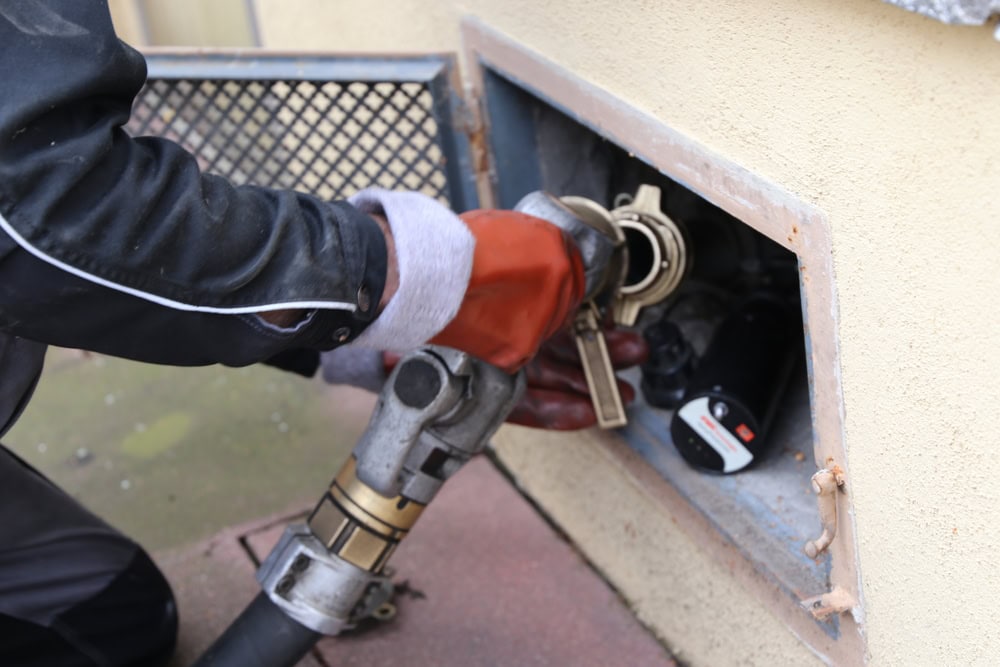
One thing worth understanding about running completely out of oil: it’s not just an inconvenience. When a tank runs dry, air can enter the fuel line. That causes the burner to lock out, and the system will not restart on its own after a delivery. A technician has to come out, bleed the line, and prime the system — that’s an added service call on top of the emergency delivery cost. It’s one of the more avoidable expenses in home heating, and it happens more often than it should, usually to will-call customers who were watching the gauge and misjudged how fast the tank was dropping.
Ordering before you’re low is the straightforward fix. You can place an order through our website any time — 24 hours a day, 365 days a year — without creating an account or logging in. Same-day and next-day delivery is available, and the price you see on the site is the price you pay, whether you’re using cash or a credit card. No surcharges, no surprises.
Not all heating oil is the same, and in Suffolk County, that’s not just a marketing line — it’s a legal matter.
New York State requires that all heating oil delivered in Suffolk County contain at least five percent biodiesel, known as a B5 blend. Every delivery we make meets that standard. B5 burns cleaner than conventional heating oil, produces less soot, and is better for your system over time — less buildup in the heat exchanger, less strain on the nozzle, and a slightly longer service interval between cleanings. It’s a small thing that adds up across a full heating season.
If you’re not sure whether your current supplier is delivering B5-compliant fuel, it’s worth asking. Non-compliant fuel is still out there in the market, and beyond the regulatory issue, it burns dirtier and creates more maintenance headaches down the line.
For homeowners in communities like Amityville, Copiague, or East Northport — where homes were built in the post-war decades and many heating systems are well into their second or third decade of service — fuel quality matters more, not less. Older systems are less forgiving of dirty combustion, and the difference between compliant and non-compliant fuel shows up in how often the heat exchanger needs cleaning and how long the nozzle lasts.
We’ve been delivering heating oil across Nassau and Suffolk Counties for over 50 years. We know the neighborhoods, the roads, and the kinds of winters Long Island throws at you. When you order through us, you’re getting B5-compliant fuel, transparent pricing, and a company that will actually show up — including on the days when showing up is hard.
Check your filter, test your thermostat, look over your tank, and make sure your CO detectors are working. Schedule a professional tune-up before the cold hits and technicians get slammed. Order your heating oil before demand peaks and prices follow. That’s genuinely most of it.
The homeowners who end up in the worst situations in January are almost always the ones who meant to get to this in October and didn’t. The fix isn’t complicated — it just requires doing it while there’s still time and flexibility.
If you’re ready to get your system serviced or want to lock in your pre-season oil supply, we’re here to help. Reach out any time — we’re available 24 hours a day, and we’ve been doing this on Long Island long enough to know exactly what your home needs heading into winter.
Article details:
Share:
Continue learning: