Everything Suffolk County homeowners need to know about HVAC ductwork installation — the process, the costs, and what to watch out for.
Share:
Summary:
Your bedroom is always cold. The living room is fine, but the back of the house never quite gets there. Your heating bill went up again this winter, and your system seems to run longer than it used to. Sound familiar? For a lot of Suffolk County homeowners, these aren’t random annoyances — they’re symptoms of a duct system that’s aging out, leaking, or was never sized correctly to begin with. Understanding how HVAC ductwork installation works is the first step toward actually fixing it. Here’s what the process looks like, what it costs, and what to know before you hire anyone.
Ductwork installation isn’t just running metal through walls and calling it done. A proper installation starts with a load calculation — specifically, what the industry calls a Manual J calculation — which determines exactly how much heating and cooling each room in your home actually needs. Without that step, everything downstream is a guess.
From there, we design the duct layout using Manual D standards, which govern how ducts should be sized and routed to deliver the right amount of airflow to each space. Think of it as the blueprint before anyone picks up a single piece of sheet metal. Skipping this design phase is one of the most common ways ductwork installations go wrong, and it’s one of the first questions you should ask any contractor you’re considering.
Once the design is finalized, the hands-on work begins. We typically start by building out the main trunk line — the central channel that carries conditioned air from your furnace or air handler — and then branch off from there to individual rooms. Rigid sheet metal is standard for trunk lines and longer runs because it holds its shape, maintains airflow, and lasts longer. Flexible duct is used for shorter branch runs connecting to individual registers, and when it’s installed correctly — properly supported, without kinks or excessive length — it works well. The problems come when it’s installed sloppily, with sags and bends that choke airflow.
Sealing is where a lot of contractors cut corners, and it’s where you lose the most money if they do. The right material for sealing duct joints is mastic sealant — a thick, paste-like compound that stays flexible and holds up over time. Cloth-backed duct tape, despite the name, is not the right tool for this job. The U.S. Department of Energy is explicit about this: cloth tape fails, often within a year or two, leaving gaps that bleed conditioned air into your attic or crawl space. Foil tape with a UL rating is the acceptable alternative when mastic isn’t used.
After sealing, any ducts running through unconditioned spaces — attics, basements, crawl spaces — need to be insulated. This is especially important in Suffolk County, where January temperatures regularly drop below 25°F and those spaces get brutally cold. Uninsulated ducts in a freezing attic can lose a significant portion of their heat before the air ever reaches the register.
The final step is testing. We measure airflow at each register and check static pressure across the system to confirm everything is balanced and performing as designed. This isn’t optional — it’s the proof of work.
Cost is usually the first question, and the honest answer is that it depends on the scope of the job. For a full ductwork replacement in a typical 2,000 square foot Suffolk County home, most homeowners pay somewhere between $4,000 and $8,000. Larger homes, more complex layouts, or systems being installed where no ductwork previously existed can push that range higher — sometimes significantly.
What drives cost up most is scope. Replacing a deteriorated system in a home built in the 1960s or 1970s — which describes a lot of houses in towns like Huntington, Smithtown, and Bay Shore — often involves navigating older construction, dealing with existing insulation, and working around finished spaces. It’s more labor-intensive than a straightforward installation in new construction.
What drives cost down is targeted work. Not every situation requires a full replacement. If your system is relatively recent but has a few problem areas — joints that have separated, sections running through an uninsulated crawl space, a return air duct that was never properly sealed — targeted repairs can restore a significant amount of efficiency at a fraction of the cost. The key is getting an honest assessment from someone who isn’t automatically steering you toward the most expensive option.
One thing worth understanding: the 20 to 30 percent of conditioned air that leaks through a typical failing duct system isn’t an abstract statistic. On Long Island, where roughly 59 percent of homes heat with oil and fuel costs are consistently above the national average, that leakage translates directly into money spent heating your attic instead of your living room. Fixing it pays for itself over time.
Want live answers?
Connect with a Suffolk Oil expert for fast, friendly support.
One of the most common concerns we hear from homeowners is that new ductwork means replacing their entire heating system. In most cases, that’s not true. If your oil furnace or air handler is in reasonable condition, new or repaired ductwork can be connected to your existing equipment — you’re upgrading the delivery system, not the engine.
That said, the connection point matters. Where the ductwork meets the furnace — at the plenum — needs to be properly sealed and sized to match the system’s airflow requirements. A mismatch here can cause pressure problems that reduce efficiency and put unnecessary strain on the equipment. This is another reason the upfront design work is so important: it accounts for what you already have and makes sure the new system is built around it.
This question is coming up more and more across Suffolk County as homeowners explore heat pumps — driven in part by PSEG Long Island incentives and rising oil prices. The short answer is: it depends, and you need a professional to assess it before assuming either way.
Heat pumps move air differently than oil furnaces. They operate at lower supply air temperatures and higher airflow rates, which means the ductwork has to be sized to handle that volume. Many older duct systems — particularly those in homes built between the 1950s and 1980s, which make up a large share of the housing stock in places like Brentwood, Medford, and Islip — were designed around the characteristics of a gas or oil furnace and may not move enough air for a heat pump to work efficiently.
In some cases, modifications are straightforward: enlarging a few undersized branch runs, adding return air capacity, or improving sealing so the system isn’t fighting itself. In others, a more substantial overhaul makes sense, especially if the existing ductwork is already aging and leaking. The assessment itself — done properly, with actual airflow measurements and a load calculation — gives you a clear picture of what you’re working with and what it would take to make a heat pump work in your home.
What you want to avoid is a contractor who gives you a yes or no answer on heat pump compatibility without actually looking at the system. That kind of shortcut tends to create problems that show up after installation, when fixing them is more expensive and more disruptive.
In Suffolk County, ductwork installation isn’t just a technical job — it’s a regulated one. County law explicitly includes ductwork for heating, ventilation, and air conditioning systems within the definition of home improvement work, which means the contractor doing the work must hold a valid Suffolk County Home Improvement Contractor license. This isn’t a formality. It’s a legal requirement, and it exists to protect homeowners from unlicensed operators who may not carry insurance or follow code.
Beyond licensing, most ductwork installations require permits from the Suffolk County Building Department. The permit process includes a rough-in inspection — which happens before the ducts are concealed inside walls or ceilings — and a final inspection confirming that insulation, sealing, and installation quality all meet code. A contractor who suggests skipping the permit to save time or money is a red flag. Unpermitted work can create complications when you sell the home and may affect your ability to make insurance claims if something goes wrong.
When vetting contractors, ask directly: will you pull the permit, and will you be on-site for the inspections? A licensed, experienced contractor will say yes without hesitation. Getting that answer in writing, along with a detailed, itemized estimate, is the baseline for any job in this county.
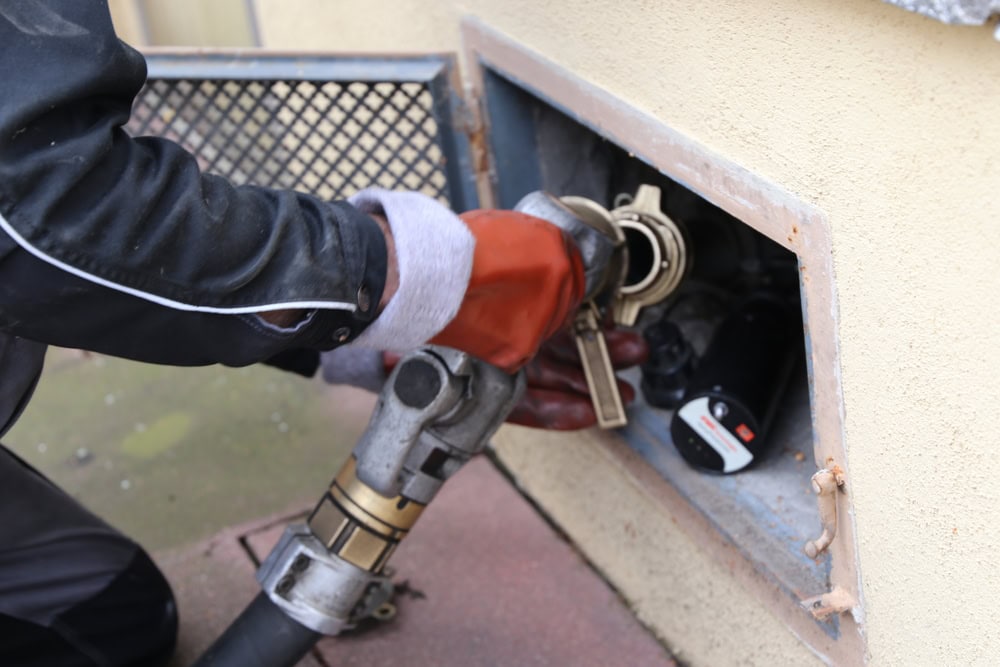
One more thing worth knowing: Suffolk County requires that all residential heating oil deliveries use a B5 biodiesel blend — 5 percent biodiesel mixed with conventional heating oil. It’s the state-mandated standard for Downstate New York. This cleaner-burning fuel reduces residue buildup in heating equipment, which over time can support longer equipment life — a small but real benefit when you’re also investing in new ductwork.
If your home has uneven heating, climbing energy bills, or ductwork that hasn’t been touched since the Carter administration, you’re not alone — and the fix is usually more straightforward than people expect once you have an honest assessment in hand.
The most important thing is working with someone who knows this market. Suffolk County has specific licensing requirements, permit obligations, and a housing stock that’s mostly 40 to 60 years old. We’ve been serving Long Island homeowners for over 50 years, and we understand the unique challenges that come with maintaining and upgrading heating systems across this region.
If you have questions about your heating system, your ductwork, or how the two work together, reach out to us — we’re available 24 hours a day, and we’re happy to point you in the right direction.
Continue learning: